
Miami County Warrant Access Chain
No dedicated official Miami County active-warrant search page was found in the county pages reviewed for the research file. That is the most important fact for this page. A person should not treat a third-party list, social post, or old docket entry as final proof that a Miami County warrant is active or cleared. The official path is to identify the court or agency, then confirm the warrant with the court clerk, the Sheriff's Office, or an attorney.
For District Court cases, use Kansas CaseSearch or Miami County docket-by-date PDFs to locate related criminal, traffic, probation-violation, and failure-to-appear events. Docket entries may show first appearances, bond appearances, probation-violation status, or missed-court consequences, but they do not always state that an active warrant exists. For city matters, contact Paola, Louisburg, Osawatomie, or Spring Hill Municipal Court. For sheriff confirmation, call the Miami County Sheriff's Office.
The KBI Kansas Most Wanted page is a statewide wanted-person source, not a complete Miami County warrant list.
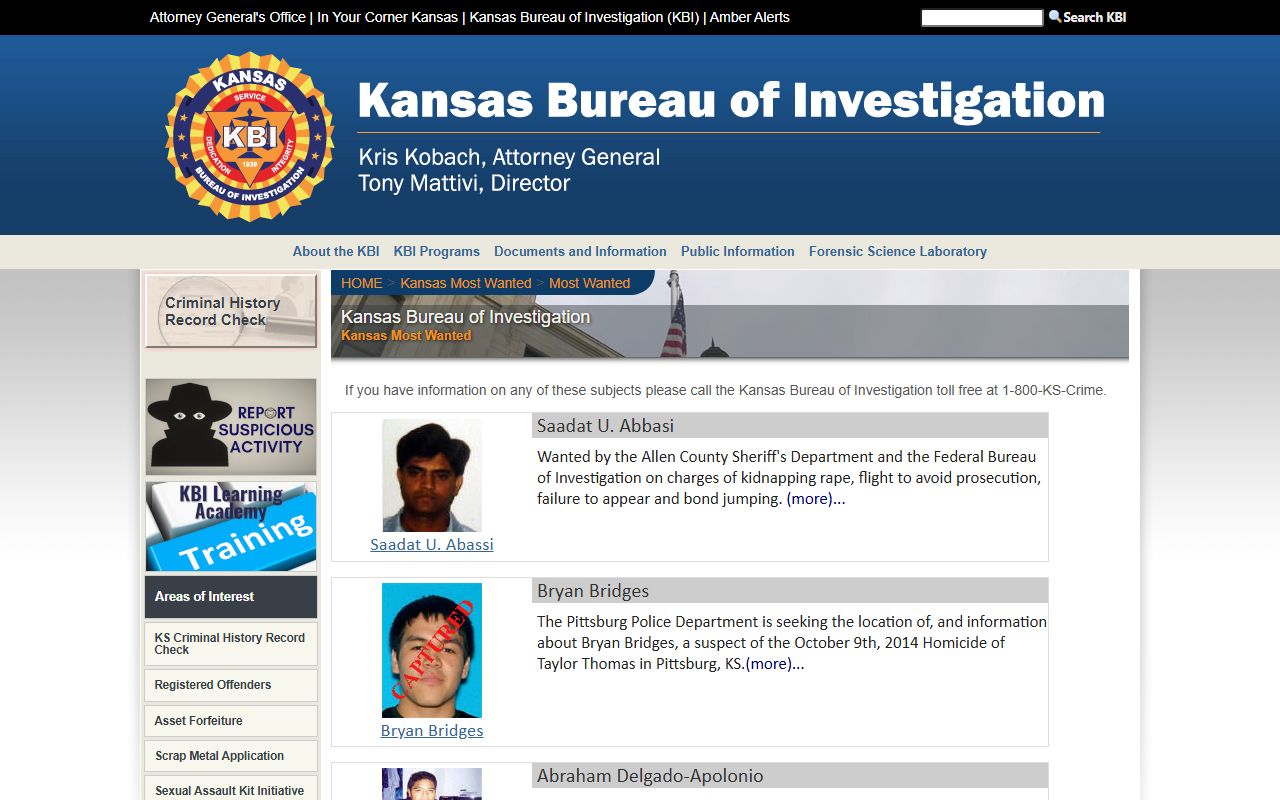
Use KBI Most Wanted for selected serious statewide listings, then confirm any Miami County court or sheriff warrant through the local access chain.
Miami County Warrant Channels
Miami County warrant records can sit in several places because warrants are issued for different reasons. A District Court bench warrant may follow a missed state criminal, traffic, or probation hearing. A municipal bench warrant may follow a city ticket or ordinance case. A search warrant may not be public while it is pending or sealed. A fugitive warrant can involve another county or state. The right channel depends on the case origin.
| Channel | Use It For | What It Can Confirm |
|---|---|---|
| District Court | State criminal, traffic, fish/game, probation, and failure-to-appear matters. | Case number, hearings, bond events, and clerk instructions. |
| Municipal court | City ordinance and local traffic cases in Paola, Louisburg, Osawatomie, or Spring Hill. | Ticket status, warrant or hold issue, court date, payment limits. |
| Sheriff's Office | Law-enforcement confirmation, surrender instructions, and records requests. | Whether sheriff contact is required and where to appear. |
| KBI Most Wanted | Selected serious statewide wanted persons. | State wanted listing and tip-line path. |
| Attorney route | Known warrant, bond, recall, or motion-to-quash questions. | How to approach court without making the problem worse. |
Note: Paying a fine online may not recall a warrant unless the court confirms that payment resolves the appearance issue.
Types of Miami County Warrants
Warrant type affects public access. Arrest and bench warrants are often tied to criminal or traffic cases. Search warrants are different because they authorize a search, and they may stay sealed until executed and returned. Municipal warrants are tied to city court cases. Fugitive or out-of-county warrants may involve transport or extradition, so local staff may have less public detail than the issuing agency.
- Arrest warrant: issued by a judge based on probable cause in a criminal matter.
- Bench warrant: issued after failure to appear, probation violation, contempt, unpaid fines, or failure to comply with a court order.
- Search warrant: authorizes law enforcement to search a person, place, or property and may be sealed.
- Municipal warrant: tied to local ordinance or traffic cases in city court.
- Fugitive warrant: may involve another county or state and may require transport procedures.
How to Search Miami County Warrants
Because the research found no official county warrant search portal, the best search process starts with the case source. Use Kansas CaseSearch for District Court clues, use municipal court pages for city matters, then call the right clerk or the Sheriff's Office for confirmation. If the person may be in custody, check jail and state offender channels separately because custody and warrants are not the same record.
- Decide whether the case is District Court or municipal court. State charges and many traffic cases use District Court, while city ordinance tickets use municipal court.
- Search court records by name, case number, or citation when available. Look for failure-to-appear, bond, probation, or first-appearance events.
- Call the court clerk for the issuing court. Ask about case number, active status, bond, and next available appearance.
- Call the Miami County Sheriff's Office at 913-294-3232 if sheriff instructions, surrender, or custody status must be confirmed.
- For serious statewide listings, check KBI Most Wanted and use the KBI tip line listed there.
The Louisburg municipal court payment portal is one city-level example of how a municipal case can have a different path from District Court records.
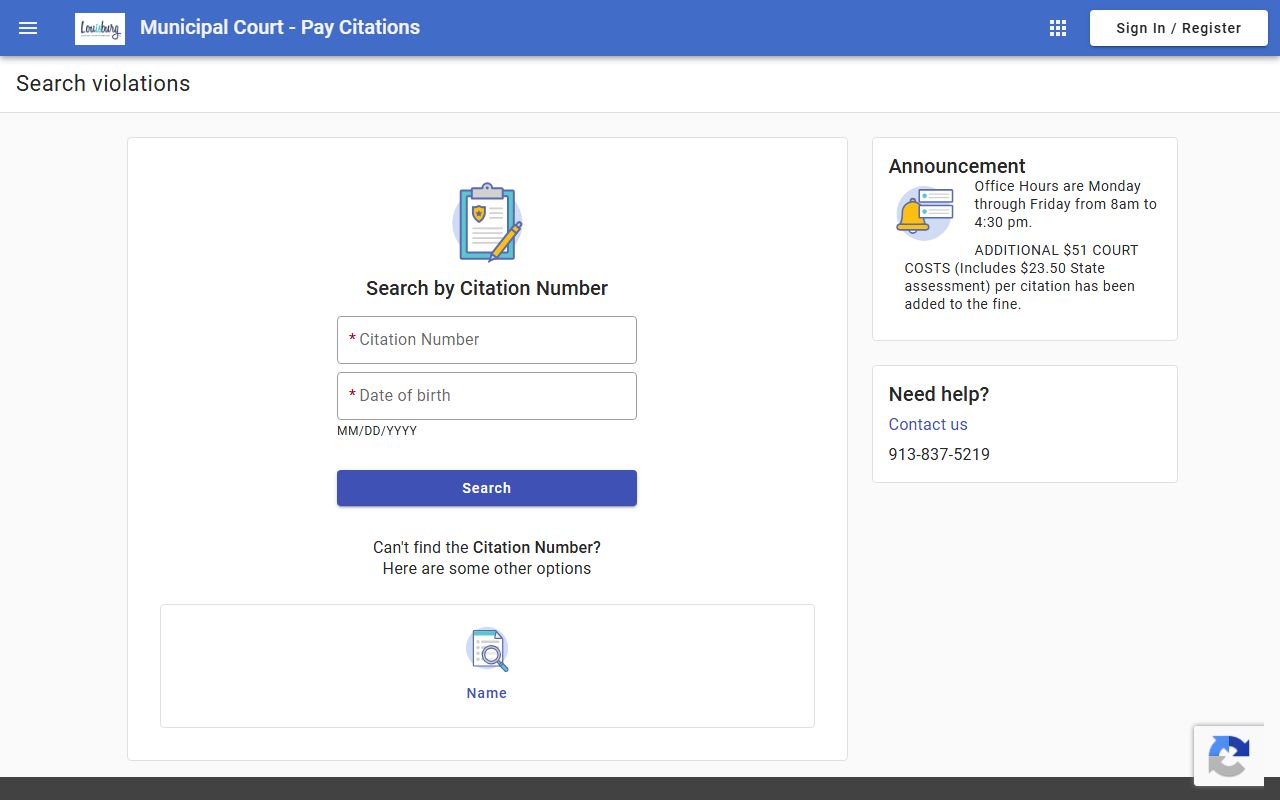
Payment portals can help locate a city court matter, but the court should confirm whether a bench warrant, hold, or appearance requirement remains.
Miami County Warrant Search Fields
The research did not locate a Miami County warrant search form with a captured field table. For a practical warrant search, the fields below are the identifiers a clerk, sheriff records staff member, or court search tool may need. They are not proof that a public county warrant database exists. Use exact details when possible, because common names can point to the wrong case.
| Field Label | Type | Required | Notes |
|---|---|---|---|
| Full name | Text | Usually needed | Use legal name and prior names if known. |
| Date of birth | Date | Often needed | Helps distinguish people with similar names. |
| Case number | Text | Optional but useful | Miami District Court examples use MI prefixes for many recent cases. |
| Citation number | Text | Useful for traffic | Needed for many municipal or Central Payment Center searches. |
| Issuing court | Court name | Important | District Court, Paola, Louisburg, Osawatomie, or Spring Hill. |
Miami County Warrant Field Inventory
No official Miami County public warrant sample was located, so the research lists expected fields and public availability limits instead of a captured local record. A warrant record may show only part of the story. Public case data can show the case and hearing context, while active status, service status, and clearance should be confirmed with the issuing court or sheriff.
| Field | Public Availability Note |
|---|---|
| Name | Usually needed for search or confirmation, but no county list was found. |
| DOB | Often used to distinguish people, but not always public. |
| Case number | May be visible in CaseSearch or a docket if tied to a public case. |
| Warrant type | Bench, arrest, search, fugitive, or municipal status may require confirmation. |
| Issuing court | Miami County District Court or a municipal court. |
| Charge or failure reason | May appear in case detail; search warrants may be sealed. |
| Bond amount or type | May be set by court and must be confirmed with court or jail. |
| Status | Must be confirmed directly. Online calendars are not warrant clearance proof. |
Outstanding Miami County Warrant
An outstanding warrant should be handled through the issuing court and, when needed, legal counsel. The research recommends identifying the court first. District Court warrants belong with the state case. Municipal warrants belong with the city court. If sheriff contact is required, call 913-294-3232 for instructions. Do not go to a random location or rely on a payment screen unless the court says that is the right way to clear the warrant.
- Identify the court and case number from court records, citation records, or paperwork.
- Call the clerk or have an attorney call about bond, recall, quash, or next appearance options.
- Ask whether payment resolves only money owed or also resolves the failure-to-appear issue.
- Follow sheriff instructions if surrender or custody processing is required.
- Keep proof of payment, recall order, bond receipt, or new court date.
Important: An attorney can ask about court appearance and bond options before the person contacts law enforcement.
State and Federal Custody Checks
Custody searches are not warrant searches, but they can explain why a person is not reachable or why a local warrant question has become a hold or transport issue. KASPER covers people in Kansas state correctional custody or supervision. It is separate from the Miami County jail. It does not replace a call to the issuing court about a warrant.
The Kansas KASPER offender search is one statewide source assigned to Miami County warrant research.
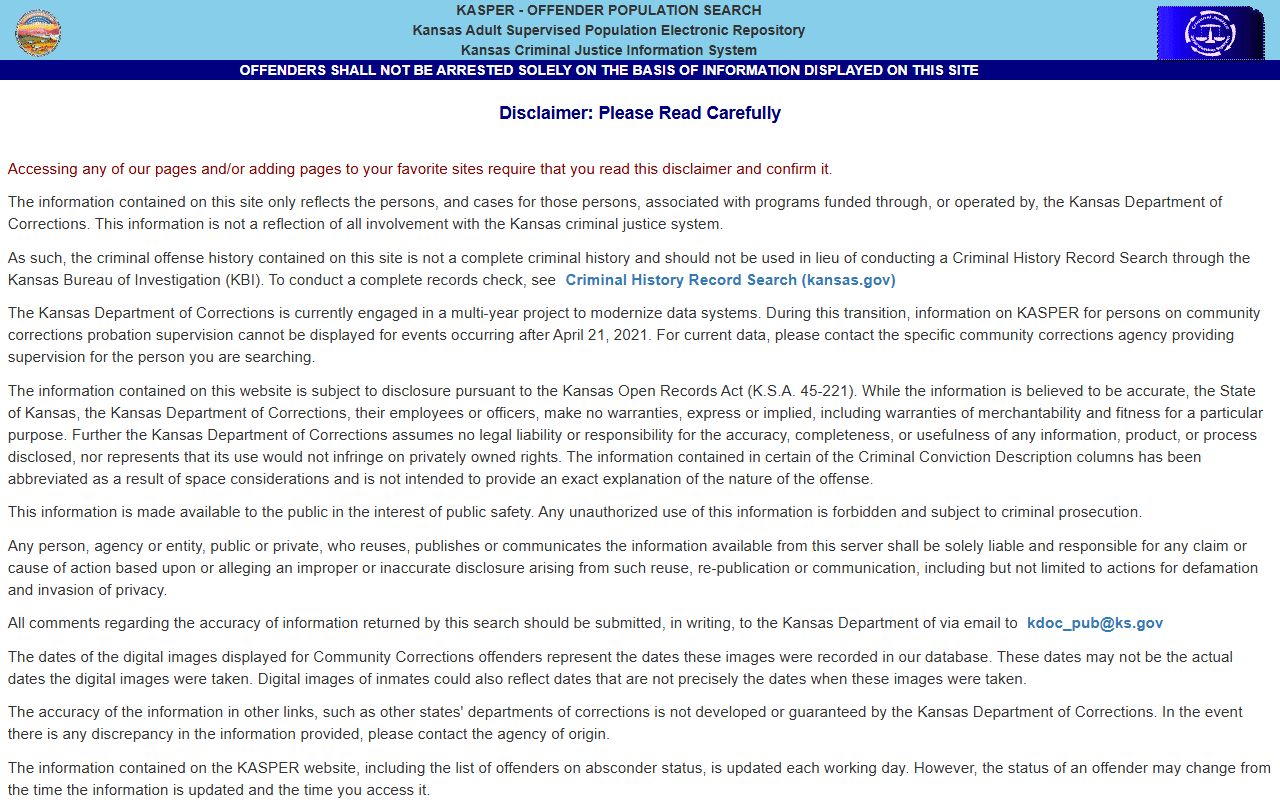
KASPER may help when a Miami County case has moved beyond county jail into state custody or supervision.
The Federal Bureau of Prisons inmate locator is separate from Kansas and Miami County warrant records.
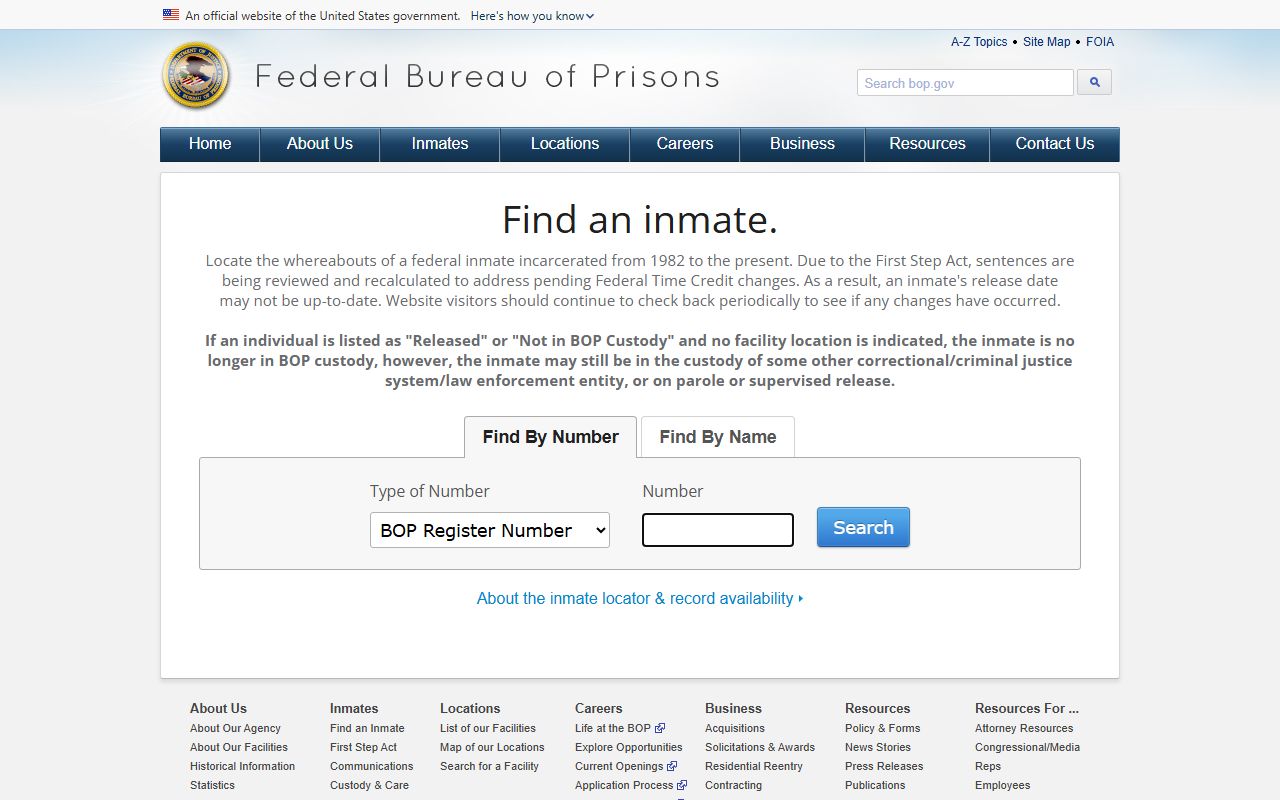
Federal custody results can explain a person's location, but federal records do not confirm whether a Miami County warrant is active, recalled, or served.
Restricted Miami County Warrants
Some warrant records are restricted by design. Search warrants can be sealed while an investigation is active. Juvenile-related warrants or case details may be confidential. Sheriff records may be withheld when release would interfere with an investigation or fall under a Kansas Open Records Act exception. The safer rule is to treat public data as a lead, then verify through the court or sheriff before taking action.
Crime tips are separate from personal warrant confirmation. Miami County Sheriff's resources list Crime Stoppers at 816-474-TIPS, KBI at 800-KSCRIME, FBI at 816-512-8200, Kansas Highway Patrol, and other law-enforcement resources. Those channels are for tips or law-enforcement contact, not for clearing a personal warrant.
Note: A cleared warrant may take time to update across court, jail, payment, and law-enforcement systems.