
Miami County Probate Court Records
Probate in Miami County is a District Court function. The same court system that handles civil, criminal, domestic, juvenile, traffic, and fish and game matters also handles probate filings. Probate records can include estates after death, will filings, letters testamentary, letters of administration, inventories, creditor notices, accountings, final settlements, guardianship petitions, conservatorship orders, trust petitions, and related court orders.
The Probate Division of the District Court does not sit in a separate courthouse. The local court contact is the Miami County District Court at 120 S. Pearl Street in Paola. The District Court is part of Kansas' 6th Judicial District with Bourbon and Linn counties. For users, that means probate records are searched through state district court channels such as CaseSearch, courthouse terminals, and the Clerk of the District Court request process.
The Kansas CaseSearch portal is the online starting point for public Miami County probate records when electronic access is available.
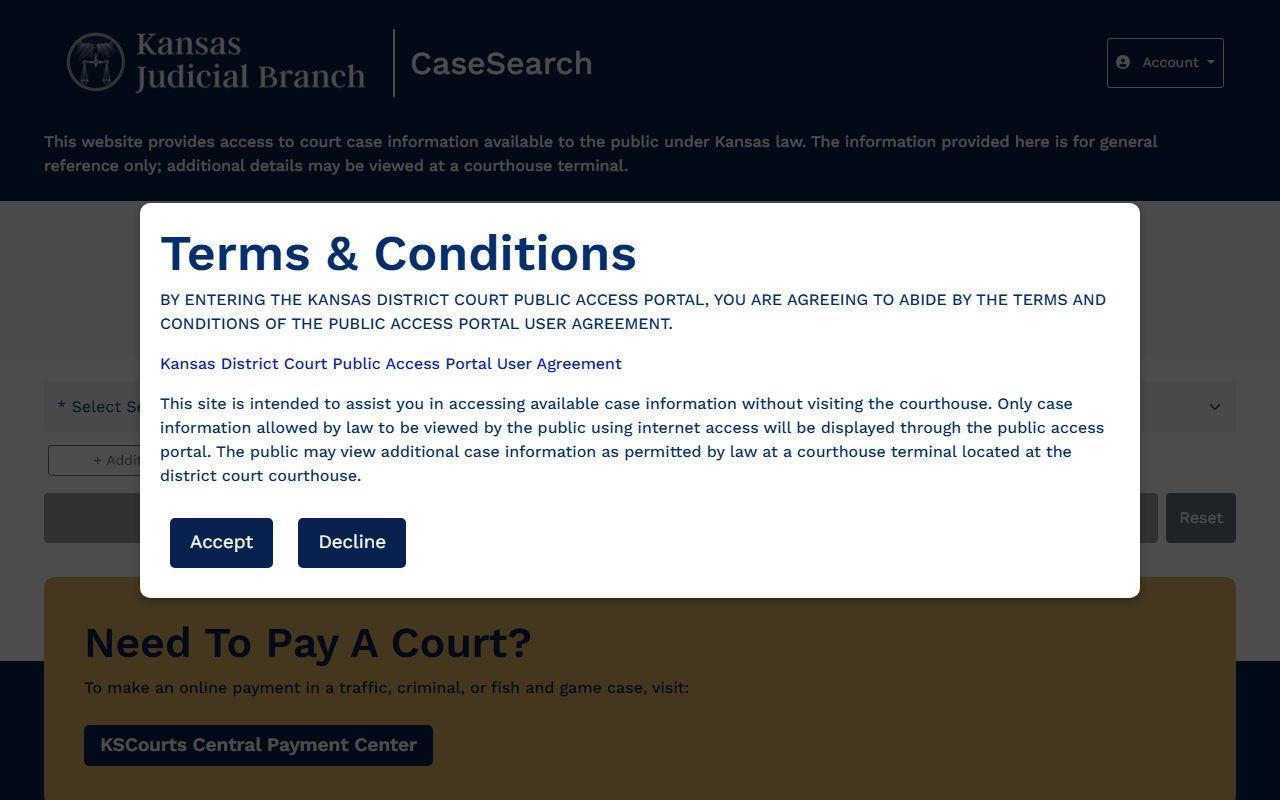
CaseSearch is useful for public probate case information, but older estates and restricted files may still require courthouse terminal access or a clerk request.
Miami County Probate Terms
Probate filings use short legal words that can be confusing when a search result only shows a case type or event. The terms below describe roles and case types that may appear in Miami County probate records. They do not prove that a filing is public, complete, or unrestricted.
- Testator
- A person who made a will before death.
- Executor
- A person named in a will to carry out estate duties after appointment by the court.
- Intestate
- A death without a valid will, which may require administration under Kansas law.
- Guardianship
- A court case about personal care or decision-making for a minor or adult who needs a guardian.
- Conservatorship
- A court case about management of property or financial affairs for a protected person.
- Fiduciary
- A person appointed to act for an estate or protected person, such as an executor, administrator, guardian, or conservator.
Search Miami County Probate Records
Search channels depend on the age and status of the probate case. Current public district court case information may appear online. Records that are not available online can be searched at the courthouse terminal reserved for public district court case access. If the needed document is a certified copy, an older paper file, or a document not exposed electronically, contact the Clerk of the District Court.
| Field Label | Type | Required | Notes |
|---|---|---|---|
| Case number | Text | No | Use if known. Kansas formats may include county, year, case type, and sequence. |
| Decedent or party name | Text | No | Search by a decedent, fiduciary, guardian, conservator, or party name when available. |
| County | Dropdown | Recommended | Select Miami County when the portal allows county filtering. |
| Case type | Dropdown | No | Choose probate, estate, guardianship, or conservatorship if the option is available. |
| Date range | Date | No | Useful for older estates or approximate filing periods. |
- Search Kansas CaseSearch by case number or party name and narrow to Miami County when possible.
- Use the courthouse public terminal if online results do not show the older probate record or document needed.
- Ask the Clerk of the District Court for copy or certification instructions when a filed document must be used for court, title, banking, or estate administration.
- Expect redaction or restricted access for guardianship, conservatorship, minor, medical, or financial details.
Miami County Probate Contact
There is one local District Court contact for Miami County probate filings. The court address is the same address used for district court case records, dockets, traffic matters filed under state law, and domestic case files. County-government open records are handled elsewhere, so estate and guardianship case requests should not be sent first to the elected County Clerk / Elections office.
Probate Division of the District Court
Miami County District Court
120 S. Pearl Street
Paola, KS 66071
913-294-3326
Public hours: 8 a.m. to 4 p.m.
The Kansas district court records page explains the public records access path for district courts, including courthouse terminals and online access.
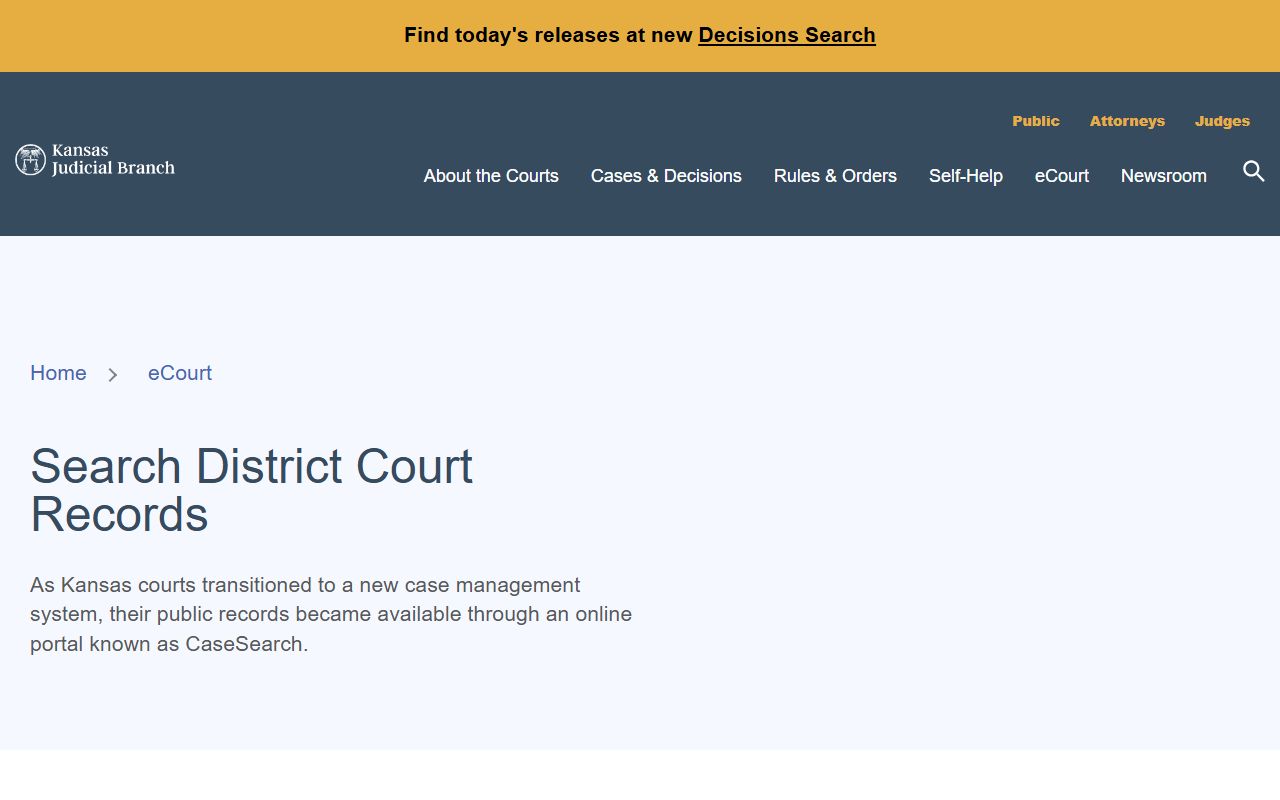
This state access page supports the local probate process because Miami County probate records are district court records rather than county clerk files.
Miami County Probate Filing Fees
A Miami-specific probate fee schedule was not located in the official county pages reviewed. The research found statewide Kansas district court probate fee examples. Treat these as statewide district court docket fees and confirm the current total with the Clerk of the District Court before filing, especially if a poverty affidavit or fee waiver request may apply.
| Probate Filing Category | Amount Found in Statewide Court Fee Source |
|---|---|
| Probate estates | $131.50 |
| Probate property or determination of descent | $71.50 |
| Probate trust and related categories | $91.50 |
| Copies or certified copies | Confirm with the Clerk of the District Court |
The K.S.A. 59-104 probate fee provision is one source tied to Kansas probate docket fee rules.
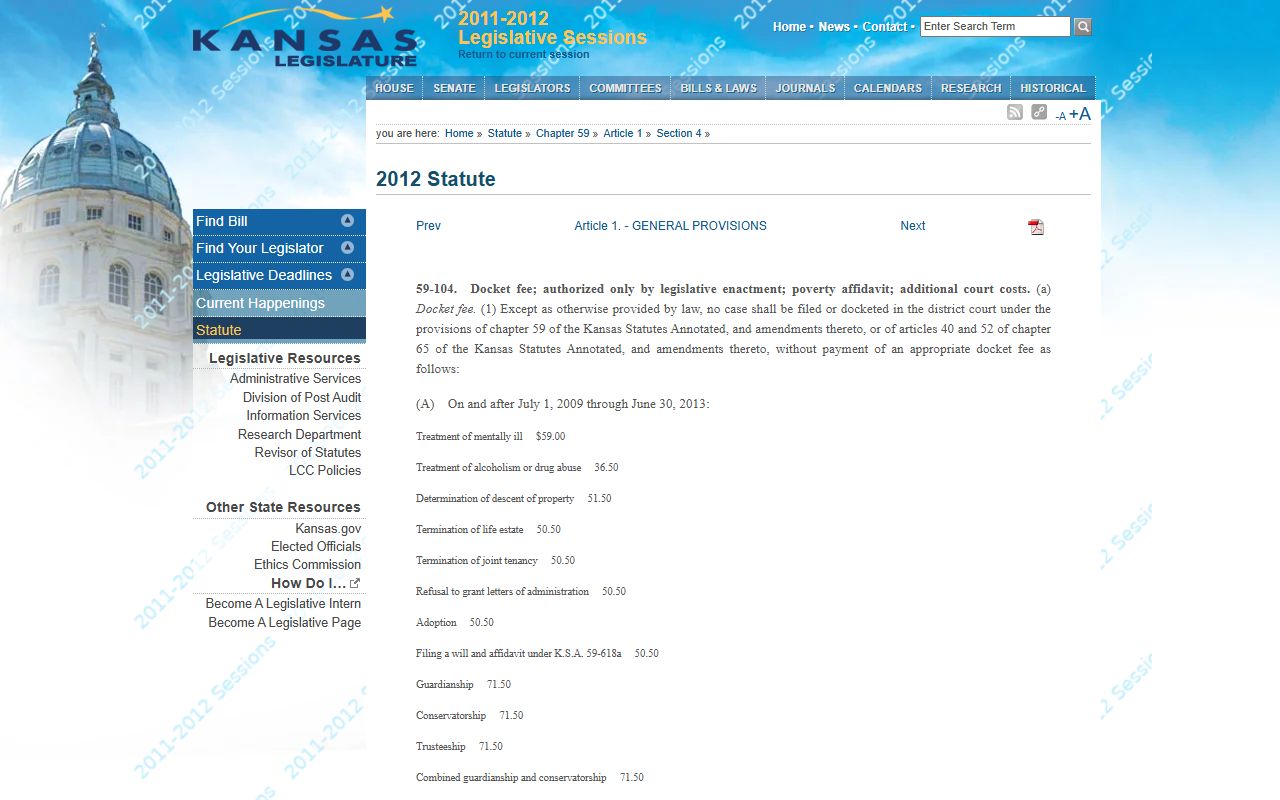
The statute source helps explain why Miami County probate filing costs follow Kansas district court fee rules instead of a separate local probate court schedule.
Miami County Probate Record Contents
A public probate file may show the petition, will, notice to creditors, appointment order, letters testamentary or administration, inventory, accountings, claims, settlement filings, and final orders. Guardianship and conservatorship files can include more sensitive information, including medical, financial, family, and protected-person details. Those details may be redacted or restricted even when the case name or limited docket entry is visible.
Older Miami County probate records may not be fully digitized. A name search can be useful, but it may not reveal every document needed for title transfer, estate administration, or family history. When the online record is thin, the practical fallback is the courthouse terminal or a direct copy request to the Clerk of the District Court.
Probate records also vary by purpose. A will filed with an estate can help prove the decedent's intent, but it may not show current authority to act unless the court has issued letters or an order appointing a fiduciary. A notice to creditors helps show the claims period. An inventory may identify property, but it can be redacted or limited when financial privacy is at issue. A final settlement or closing order may be the document needed to show that the estate was completed.
Guardianship and conservatorship records need extra care. A public docket may show a case exists, but medical reports, protected-person information, financial account details, and minor information are not treated like routine estate filings. A requester should ask the Clerk of the District Court what can be inspected, what requires party authority, and whether a judge's order is needed. This is especially important when the request is for a school, medical provider, bank, care facility, or title office.
Note: A public docket entry confirms that a probate case exists, but it may not provide a usable certified copy of the will or order.
Miami County Probate Process
Probate timing depends on assets, debts, disputes, notice requirements, and whether a will exists. A basic Miami County estate may start with a petition in District Court and continue through fiduciary appointment, notices, inventory, claim handling, accounting, distribution, and closing order. Guardianship and conservatorship matters follow different proof and reporting needs.
Estate flow: Petition filed › fee or waiver issue addressed › fiduciary appointed › notices issued › inventory and claims handled › accounting or settlement filed › closing order entered.
For records access, the same sequence helps identify what to ask for. A bank may need letters. A title company may need a certified order. A family researcher may need the will and final settlement. The record request should name the exact document if known.
If the estate involved property in Miami County but the decedent lived elsewhere, venue and record location may need review before a search is treated as complete. Kansas probate venue can depend on residence, property, and the type of filing. The safest record request names the decedent, approximate date of death, known property link, case number if known, and the document needed. That gives the court clerk enough context to distinguish a probate estate from a guardianship, conservatorship, trust matter, or determination of descent.
Miami County's Pearl Street office layout can help in-person users route the request. Probate case files belong at the courthouse with the District Court. County-government open records and the elected County Clerk / Elections office are across Pearl Street in the Administration Building. Sheriff and jail records are at the Sheriff's Office and Jail. Keeping those custodians separate is especially useful when an estate file intersects with a sheriff report, tax record, deed, or county administrative record.