
Miami County Criminal Court Records
A criminal court record is the case file kept by the Clerk of the District Court after a state criminal matter is filed. In Miami County, the District Court is the local venue for felony criminal cases and many state-law misdemeanor matters. The record may include the charging document, first appearance, bond terms, counsel entries, arraignment, motions, hearing notices, plea paperwork, trial events, orders, disposition, sentence, probation terms, revocation activity, and public financial obligations.
Municipal courts are separate from the District Court. Paola, Louisburg, Osawatomie, and Spring Hill municipal courts handle local ordinance violations, city traffic tickets, and minor city matters. Those cases can have criminal or quasi-criminal features, but the full Miami County criminal court record for state cases is a District Court file. For a closer look at filed accusations after arrest, use the Miami County arrest records and court charges path.
The Miami County Attorney page is a key local source because the County Attorney prosecutes state criminal matters filed in the District Court.
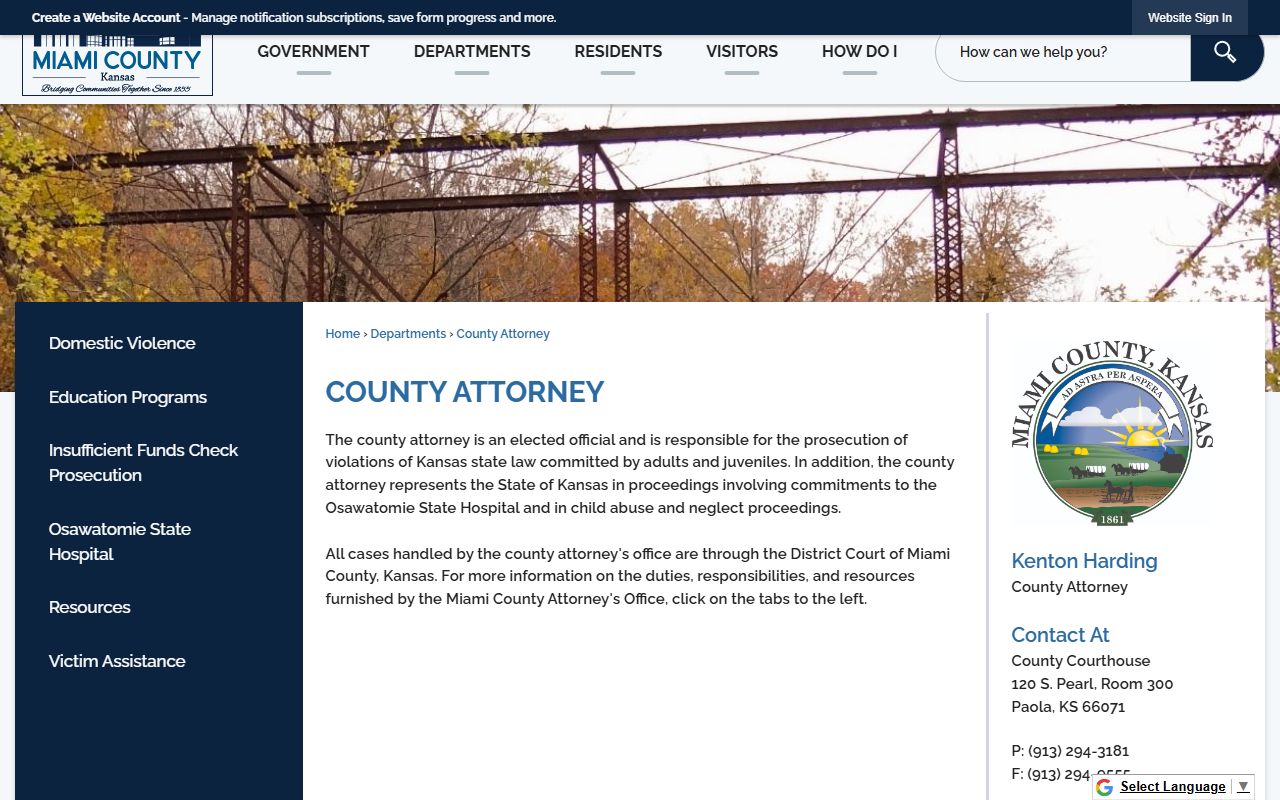
The prosecutor source helps explain why criminal court records show State of Kansas case captions, prosecutor entries, and court events after charges are filed.
Search Miami County Criminal Cases
The main online route for Miami County criminal court records is Kansas CaseSearch. Search by case number when possible because Miami County docket examples use clear CR formats, such as MI-2025-CR-000214. A name search can work, but names may return more than one person or case. The Miami County docket-by-date PDF can also confirm public hearing information, but it is a calendar, not the full criminal case file.
- Start with Kansas CaseSearch for public District Court criminal case information.
- Search by CR case number, defendant name, citation, or other available criteria.
- Filter by Miami County or court if the search screen allows county selection.
- Open the case result and read the docket entries, hearing dates, status, attorneys, and disposition fields.
- Use the courthouse terminal or Clerk of the District Court request process for public documents not available online.
- Use municipal court contacts when the case is a city ordinance matter rather than a District Court criminal case.
For state criminal-history reports, the Kansas Bureau of Investigation runs a separate fee-based criminal history search. That state background search is not the same as a Miami County criminal court record and may not include every court document or docket event. For federal criminal matters, use federal court systems instead of Miami County District Court.
Miami County Criminal Case Flow
Miami County criminal court records follow the life of a filed criminal case. The docket sample in the research shows local event types such as first appearance, bond appearance, arraignment, preliminary examination, plea hearing, bench trial, sentencing, and probation-violation status. Each event can add a docket entry even when no public document image is available online.
Case flow: Charges Filed › First Appearance › Arraignment › Pretrial / Motions › Plea or Trial › Disposition › Sentencing › Probation or Revocation Review.
| Stage | What Happens |
|---|---|
| Charges Filed | The prosecutor files a complaint, information, or other charging paper that opens or supports the criminal case. |
| First Appearance | The court addresses early issues such as identity, custody, bond, counsel, and the next setting. |
| Arraignment | Charges are formally addressed, and the defendant may enter a plea. |
| Pretrial / Motions | The parties file motions, exchange information, set status hearings, or address evidence and scheduling. |
| Plea or Trial | The case resolves by plea, bench trial, jury trial, dismissal, or another court-approved outcome. |
| Disposition | The record shows the current or final result for the case or charge. |
| Sentencing | The court imposes jail, prison, probation, fines, costs, restitution, treatment, or other terms when a conviction occurs. |
The 6th Judicial District Community Corrections page is relevant after disposition because it describes community-based assessments, supervision, case management, and adult and juvenile services for Miami, Linn, and Bourbon counties.
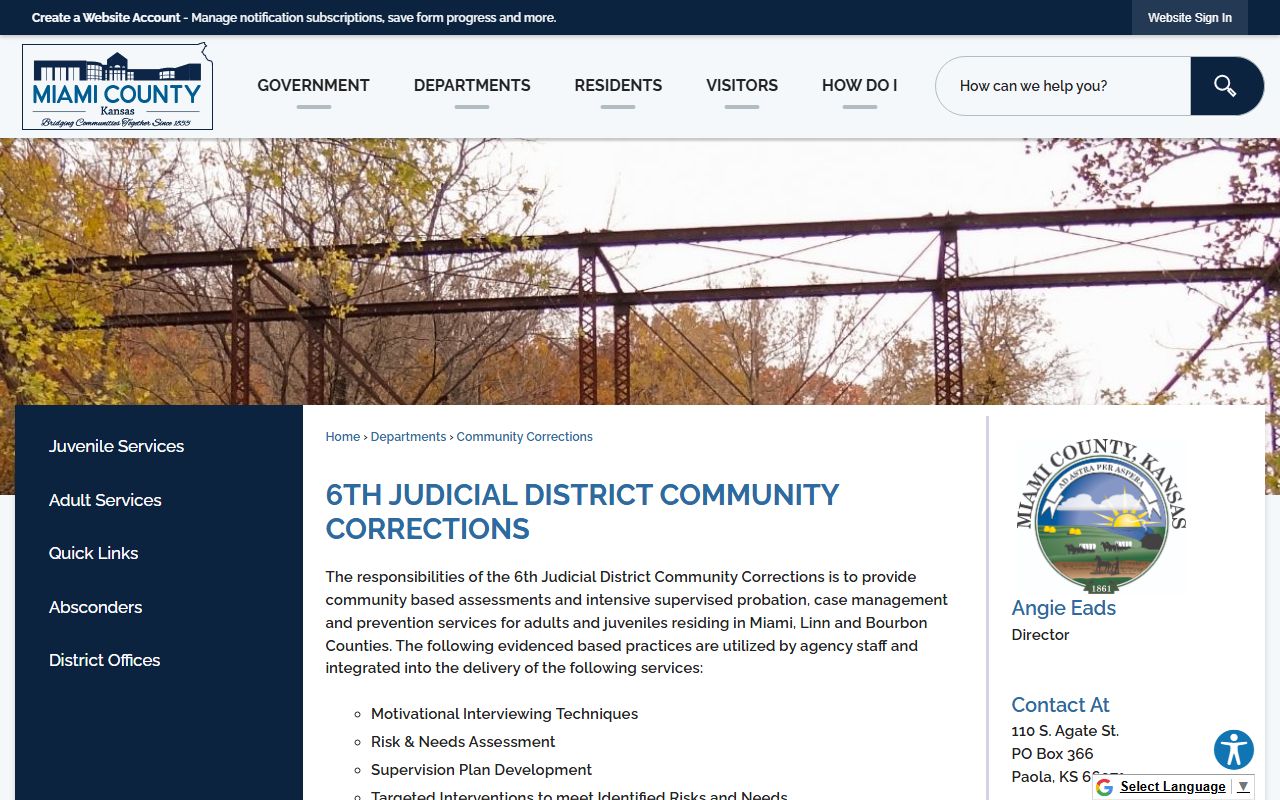
Community Corrections can appear in criminal court records when a sentence, probation condition, assessment, or violation issue becomes part of the public case history.
What Miami County Criminal Records Show
Miami County criminal court records are more detailed than a daily docket. The docket may show that a plea hearing or sentencing is set, while the case file may show the filed charge, the plea, the order, and the sentence. Public access still depends on Rule 22, sealing rules, redactions, and case type. The captured Miami docket text did not show addresses, DOBs, SSNs, or detailed charge language.
| Field | What It Shows |
|---|---|
| Case Number | The Miami County criminal identifier, commonly including MI, year, CR, and a sequence number. |
| Defendant | The person charged in the criminal case, with public identifiers limited by redaction rules. |
| Prosecutor | The State of Kansas or city prosecutor role, depending on court level. |
| Charges | The filed accusations, statute references when shown, severity level when available, and charge status. |
| Bond / Release | Bond appearance events, release terms, surety, personal recognizance, or custody-related orders when public. |
| Hearings | First appearance, arraignment, preliminary examination, plea hearing, bench trial, sentencing, and review settings. |
| Attorneys | Defense counsel, prosecutor, and Pro Se notation when a party appears without counsel. |
| Plea | The defendant's plea or plea change, if recorded and public. |
| Disposition | Dismissed, amended, guilty plea, conviction, acquittal, diversion-related outcome, or other case result. |
| Sentence | Jail, prison, probation, fine, costs, restitution, treatment, or other penalties after conviction. |
| Probation Events | Status, violation, revocation, modification, or supervision events when part of the public docket. |
Miami County Charges vs Convictions
A charge is an accusation filed in court. A conviction is a final result after a guilty plea, verdict, or other conviction-producing outcome. Miami County criminal court records can show charges that were dismissed, amended, reduced, diverted, or resolved without conviction. Do not treat the existence of a CR case number or charge entry as proof of guilt.
| Point | Charge | Conviction |
|---|---|---|
| Meaning | An accusation filed by the prosecutor or tied to a citation. | A court result based on plea, verdict, or other conviction outcome. |
| Record Stage | Appears near the start of a criminal case. | Appears after disposition and often before sentencing. |
| Can Change | May be amended, reduced, dismissed, or dropped. | May be appealed, expunged if eligible, or affected by later orders. |
| How to Read | Check current status and later docket entries. | Check disposition, sentencing entry, and any later probation or revocation records. |
| Best Source | CaseSearch, charging document, docket, or clerk copy request. | Disposition, judgment, sentence, and official court orders. |
For a focused treatment of the accusation side, the charge status, and arrest-to-court transition, use the separate court charge records page. For the full case file, keep the focus on the District Court criminal court record.
Federal Criminal Records Separate
Federal criminal cases are not Miami County District Court records. Miami County is within the District of Kansas for federal court purposes, but federal cases use federal systems such as PACER, CM/ECF, public terminals, and the District of Kansas court records office. The District of Kansas court-records page says federal case information may be searched by case number, party name, or filing date range, with public terminals in divisional office lobbies.
The official District of Kansas federal court records page is one manifest source for criminal court records research.
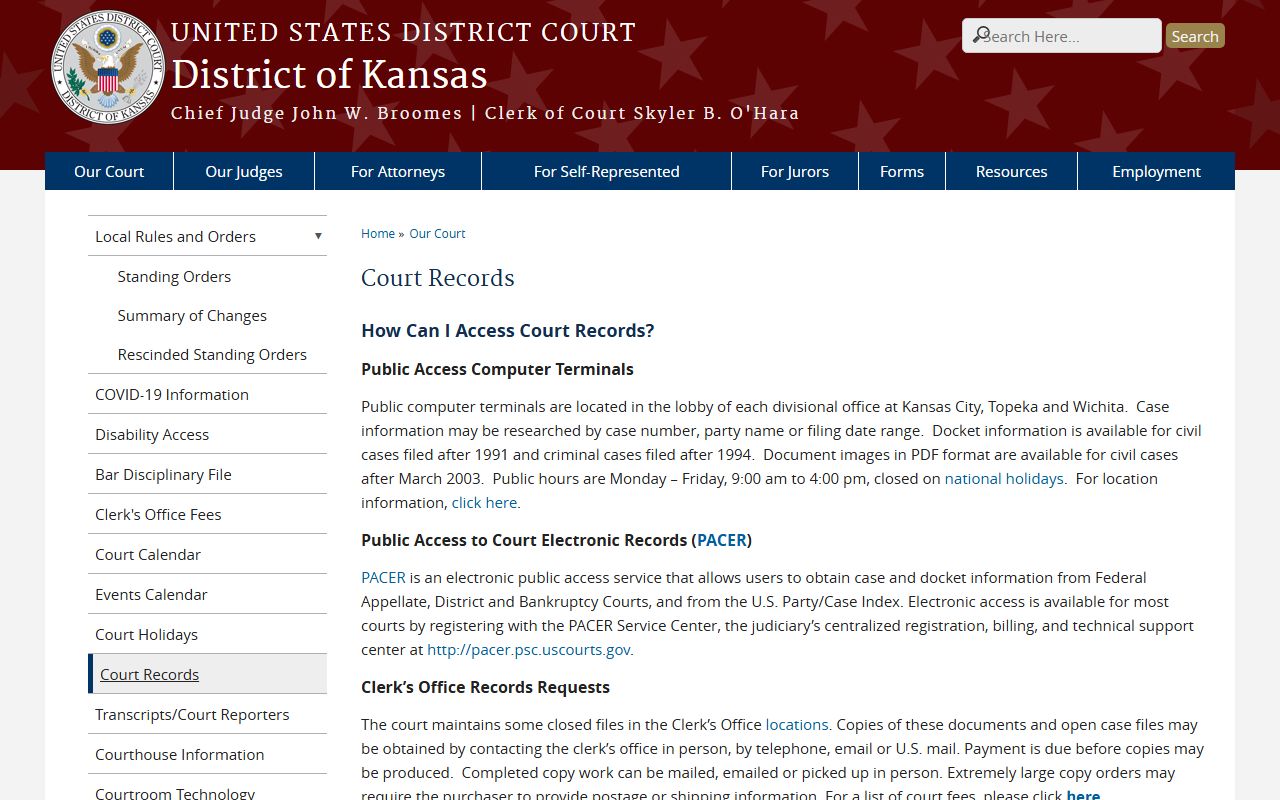
Use federal court records only when the case was filed in federal court. Miami County District Court cases remain in the Kansas state court system.
The PACER federal records access page is the remote access route for many federal dockets and documents.
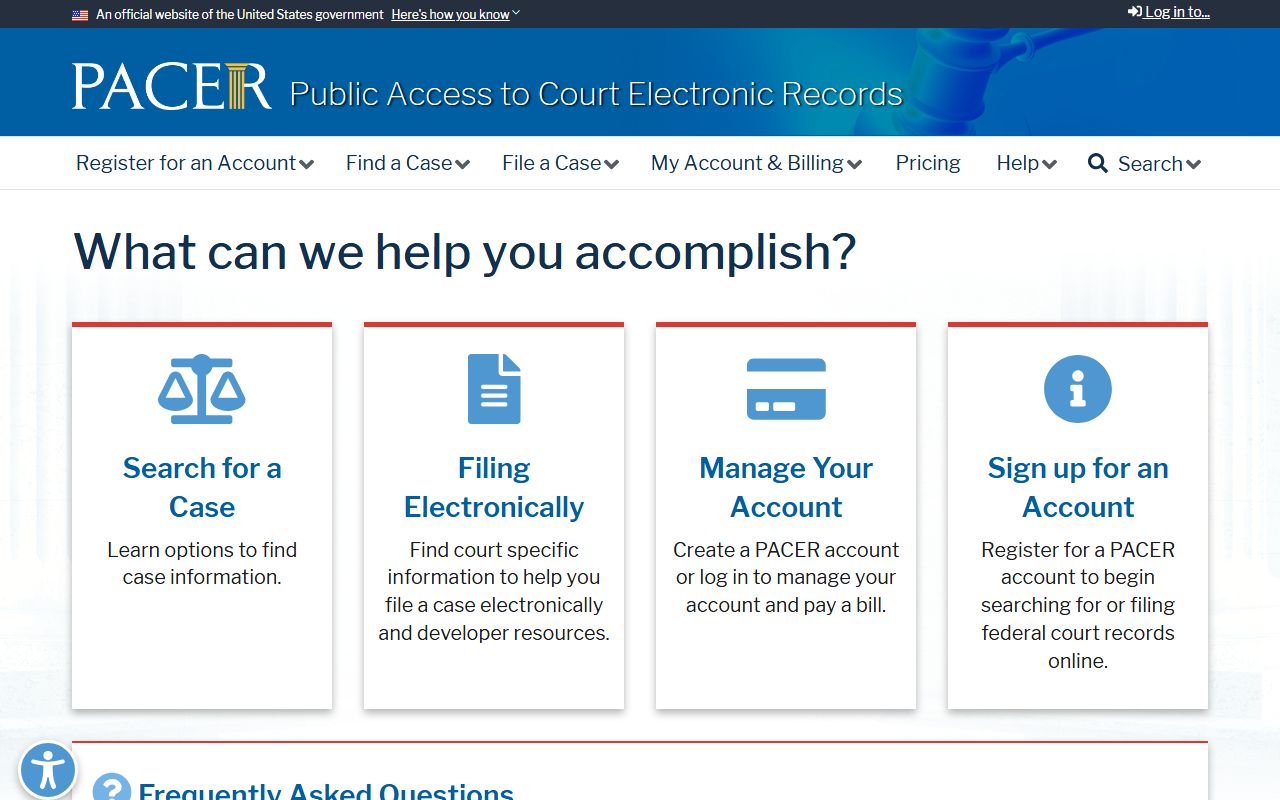
PACER can help with federal criminal case research, but it cannot certify or replace Miami County District Court criminal records.
Read Dispositions and Sentences
Disposition means the result or present outcome of a case or charge. In criminal records, that can mean dismissed, guilty, not guilty, amended, diverted, convicted, sentenced, revoked, or otherwise resolved. A single Miami County criminal case can have more than one count, and each count can move differently. Always read the disposition next to the charge and then check the sentence and later docket entries.
Sentence information can include jail, prison, probation, restitution, fines, court costs, treatment, supervision, or community-corrections involvement. The Miami County docket sample shows events such as sentencing and probation-violation status. A probation event after sentencing does not rewrite the original conviction by itself, but it can add new orders, revocation issues, sanctions, or supervision terms.
Note: A scheduled sentencing event is not the same as a final sentencing order or certified judgment.
Sealed vs Expunged Criminal Records
Miami County criminal court records can be limited by sealing, expungement, juvenile confidentiality, and redaction rules. A sealed record is hidden from public access by law or court order. An expunged record is subject to a Kansas court process that limits public access to eligible convictions, arrest records, or diversion agreements. Neither term should be used as a promise that no government agency can ever see the record.
| Point | Sealed | Expunged |
|---|---|---|
| Basic Meaning | Hidden from public access by statute or court order. | Public access is limited after a successful expungement process. |
| Trigger | Confidential case type, protected filing, or judge's sealing order. | Petition and court order under Kansas expungement law when eligible. |
| Miami County Path | Ask the District Court about party access, court order, or legal authority. | File in the court that handled the case, using the case number when possible. |
| Public Portal Effect | Record or document may not appear in public CaseSearch or terminal access. | Eligible records may be removed from public view or limited after approval. |
| Limits | Some parties, courts, or agencies may retain lawful access. | Some government, law-enforcement, licensing, or statutory uses may remain allowed. |
K.S.A. 8-248 is a driver-license address and name change statute included in the manifest set for this criminal court records page.
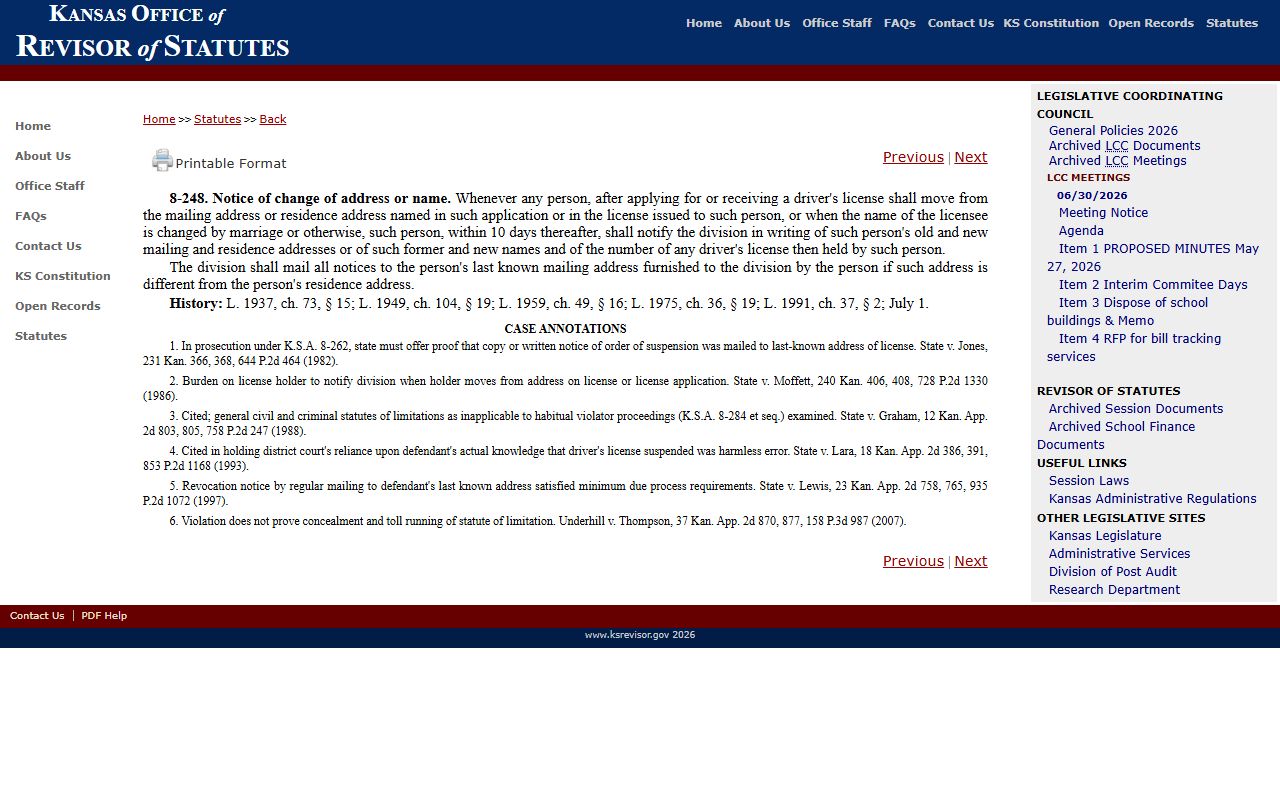
That statute is not the expungement rule, but it matters in court-record research when traffic or criminal case notices depend on current driver information.
Miami County Criminal Access Rules
Public access to Miami County criminal court records comes through Kansas CaseSearch, courthouse terminals, and court-record requests, subject to Kansas court access rules. Kansas Supreme Court Rule 22 governs public electronic access to district and appellate case records. The Kansas Open Records Act starts at K.S.A. 45-215, but court records also have court-specific restrictions.
For juvenile and child-in-need-of-care matters, confidentiality can be much stronger than in adult criminal cases. The research identifies K.S.A. 38-2209 as a child-in-need-of-care confidentiality statute. For expungement, K.S.A. 21-6614 is the central Kansas statute for eligible convictions, arrest records, and diversions.
The U.S. Attorney for the District of Kansas page is included as a manifest source for federal criminal context.
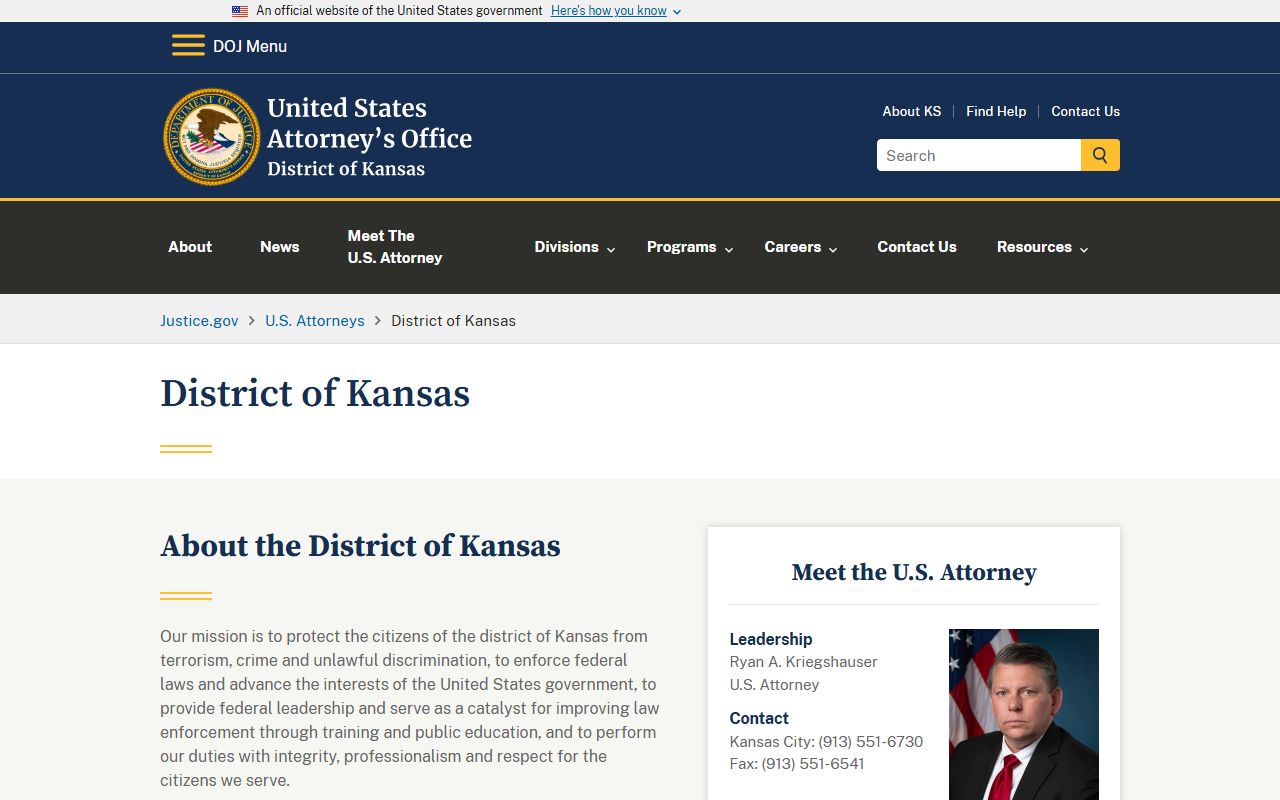
That federal prosecutor source is separate from the Miami County Attorney. Use it only when the criminal matter is federal rather than a Kansas District Court case.
Restricted Miami County Criminal Records
Restricted criminal records include sealed cases, sealed documents, expunged records, juvenile matters, child-in-need-of-care records, mental health or treatment details, victim-sensitive material, protected personal identifiers, and records withheld during lawful investigation or by court order. Public docket snippets may still show limited hearing information even when the full file is not open.
If a Miami County criminal record is missing from CaseSearch, that does not prove the case never existed. It may be older, not yet migrated, sealed, expunged, municipal rather than District Court, or available only by courthouse terminal or clerk request. The practical chain is to confirm the court level, search the public portal, check the docket calendar if relevant, and then contact the Clerk of the District Court for public copy options.