
Miami County Arrest Records and Charges
Miami County arrest records are created on the law-enforcement side. The Miami County Sheriff's Office and Jail handle custody records, sheriff reports, records checks, and letters of incarceration. The official sheriff records page says report requests can be made in person or in writing, and the records-check page says a personal sheriff record check must be obtained in person by the person who is asking for it. Those sources are useful when the question is whether the Sheriff's Office has a report, booking-related record, or local agency history.
Court charge records are different. A charge record is the filed accusation after an arrest or citation. In Miami County, state criminal charges are filed and prosecuted in District Court through the Miami County Attorney, while municipal ordinance charges may be handled by city prosecutors in Paola, Louisburg, Osawatomie, or Spring Hill Municipal Court. The court file can show the case number, charge, hearing events, bond, plea, disposition, sentence, and later probation events. Custody details belong with the jail, so current booking questions fit better on the Miami County inmate records page.
The Kansas Bureau of Investigation homepage is one statewide source connected to criminal-history and offender-search tools.
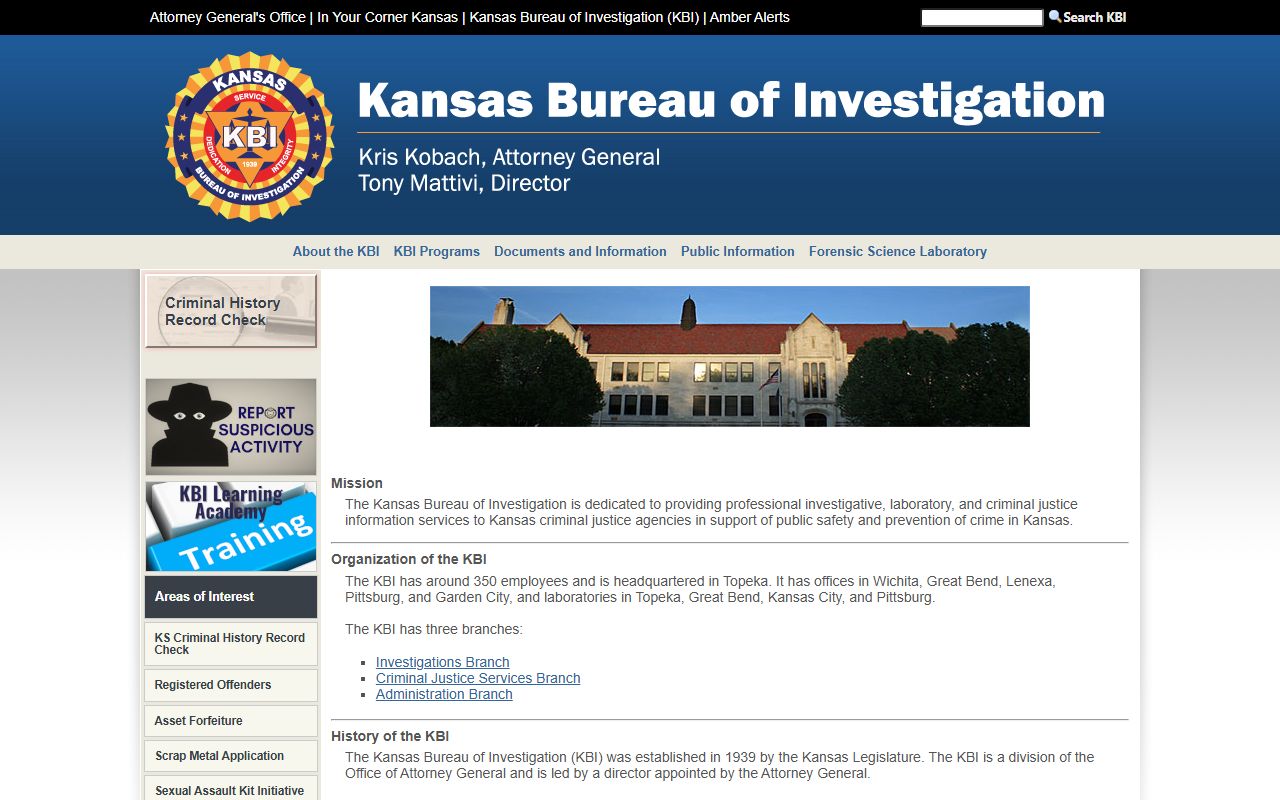
That statewide layer helps explain why a Miami County charge can appear in court records, local sheriff records, and state criminal-history systems at different points in the case.
Search Miami County Arrest Records
The court side starts with Kansas CaseSearch for public District Court case information. Search by name, case number, business name, citation, or other available criteria, then limit to Miami County when the interface allows it. Miami County docket examples use the MI county prefix, such as MI-2025-CR-000214 for a criminal matter and MI-2026-TR-000033 for a traffic matter. Docket-by-date PDFs may show hearings such as first appearance, arraignment, bond appearance, plea hearing, preliminary examination, sentencing, and probation-violation status, but the captured public docket text did not show full charge language.
- Start with the court level. Use District Court for felony, many state misdemeanor, probation, and state traffic cases.
- Use the defendant name or known case number in CaseSearch, then compare any result against the Miami County case prefix and case type.
- Read the docket events first. A first appearance or arraignment can show that charges moved from arrest into court.
- Request copies from the Clerk of the District Court when the public view does not show the charging document or full charge detail.
- For sheriff reports or booking records, use the Sheriff's Central Records Division rather than the District Court clerk.
Municipal matters follow a separate path. Paola Municipal Court handles local traffic and court-date questions through the Paola Justice Center. Louisburg Municipal Court publishes a city court directory and Tyler payment portal. Osawatomie and Spring Hill also handle municipal ordinance or traffic matters. A city ticket may not appear the same way as a District Court criminal case.
Miami County Charges After Arrest
Charges after arrest begin with a charging document. The research identifies the local prosecutor as the Miami County Attorney, not a district attorney by title. The County Attorney page states that the office handles cases through the District Court of Miami County, Kansas. In city court matters, the city prosecutor handles ordinance cases. A single arrest can lead to one charge, several charges, a later amended charge, or no filed charge if the prosecutor does not proceed.
| Document | Who Files It | Common Use | What to Check |
|---|---|---|---|
| Complaint | Prosecutor or officer-based filing process | Initial criminal or ordinance accusation | Name, offense date, charge wording, court, and case number. |
| Information | Prosecutor | Many state criminal prosecutions after review | Statute, severity level, amended counts, and defendant identity. |
| Indictment | Grand jury | Less common, serious cases | Counts approved by the grand jury and filing date. |
The Kansas criminal history record search is a separate state background-search resource, not a substitute for reading the Miami County charging document.
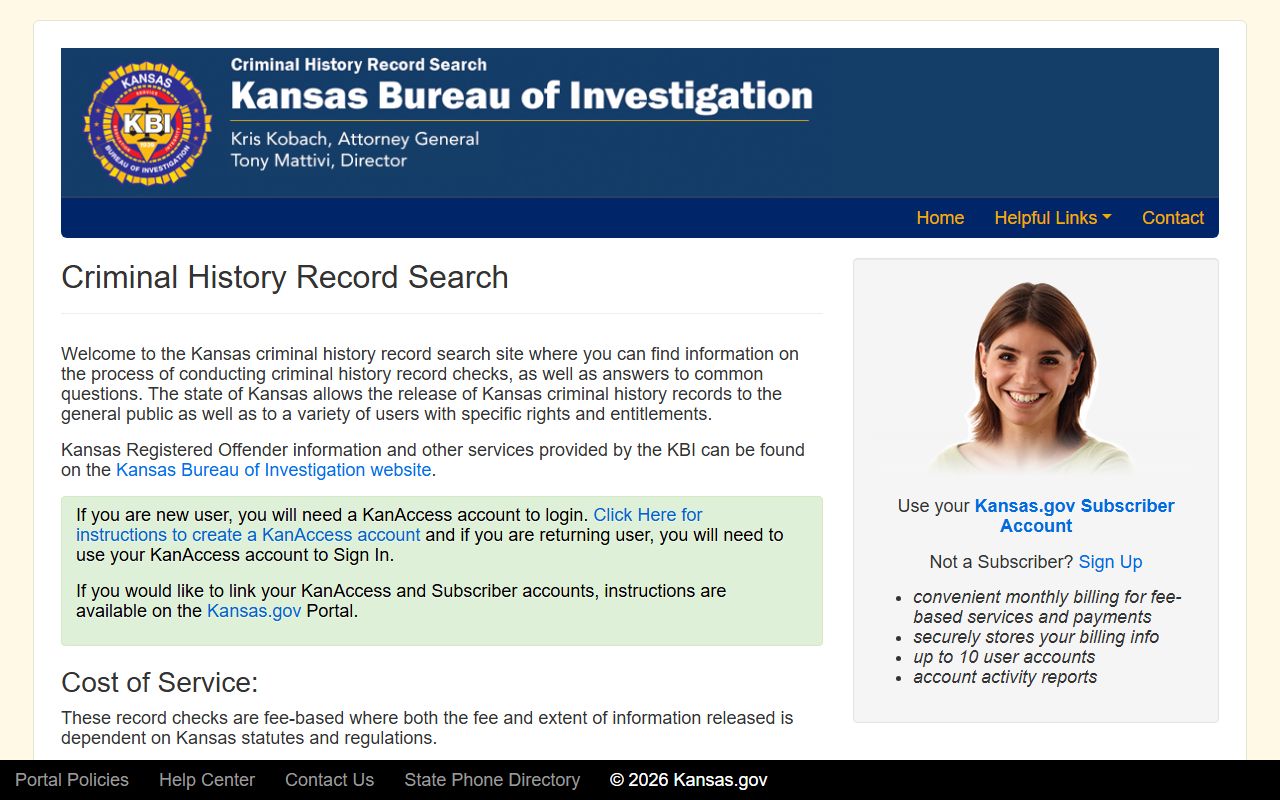
Use state criminal history as a broader check, then return to District Court or municipal court records for the filed charge and case status.
Miami County Charge Status
A charge is not static. Miami County docket entries can show the court event that moves a case forward, while the case detail or clerk copy is the better place to confirm charge status. A charge may remain pending, be amended, be reduced, be dismissed, or lead to a plea or verdict. Kansas court terms in the research include disposition, diversion, sentencing, probation, and revocation. Those terms matter because the same case can contain both active counts and counts that no longer control the outcome.
| Status | Meaning in a Court Charge Record | Where to Confirm |
|---|---|---|
| Pending | The accusation is still before the court and no final outcome has been entered. | CaseSearch, docket events, or clerk copy. |
| Amended or reduced | The prosecutor changed the charge, severity, wording, or count structure. | Charging document, amended filing, or docket entry. |
| Dismissed | The court or prosecutor ended that count without a conviction on that count. | Disposition entry or order. |
| Diversion | A prosecutor-approved program may avoid conviction if completed. | Diversion agreement and later disposition. |
| Convicted | A plea or verdict resulted in guilt on that charge or count. | Judgment, disposition, and sentencing entry. |
The KBI registered offender website is narrower than a charge lookup because it covers people required to register under the Kansas offender-registration framework.
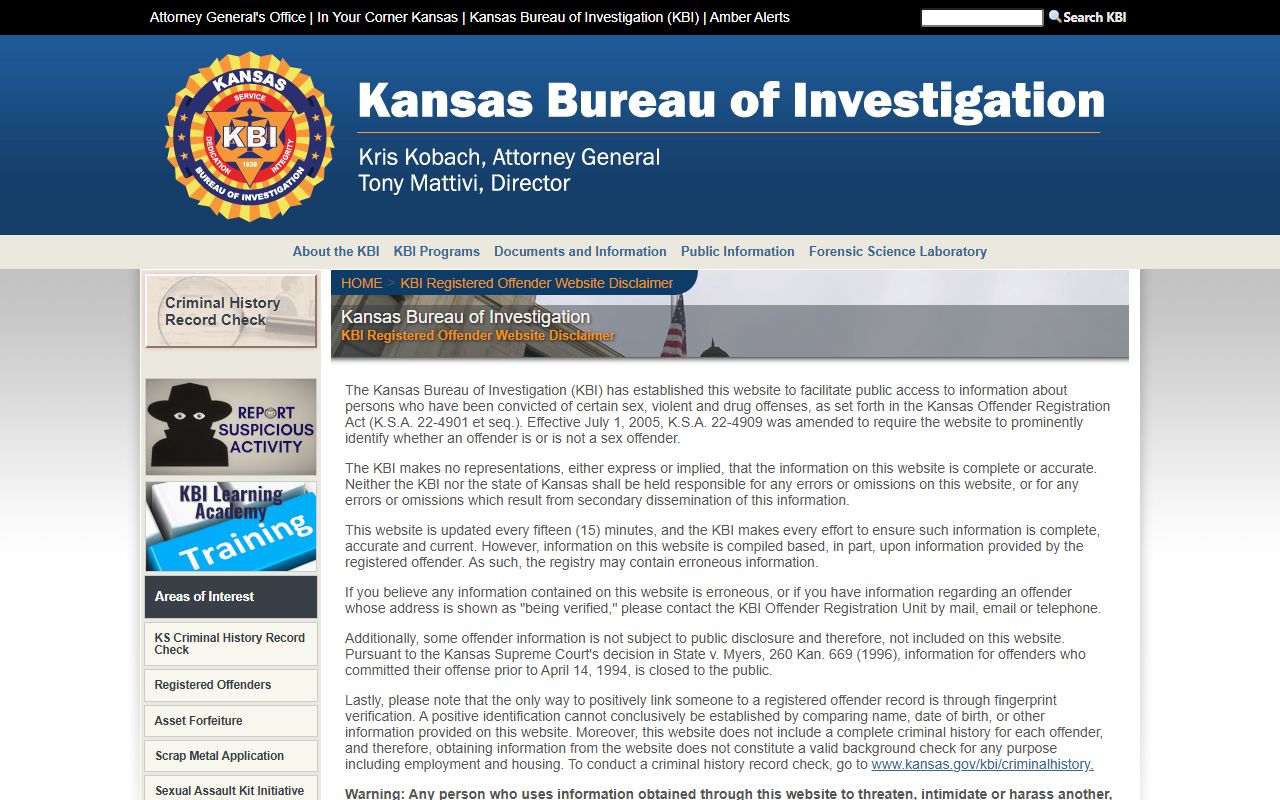
A registry record should not be read as the full Miami County case file, but it can point to a later obligation tied to a qualifying conviction.
Miami County Charge vs Conviction
Being charged is not the same as being convicted. Miami County court records may list charges that were filed, amended, dismissed, diverted, or resolved by plea or trial. A background search that only shows the first accusation can mislead a reader if it omits the final disposition. The full criminal case file is the better source for the court outcome, and a more complete explanation belongs with Miami County criminal court records.
| Point Compared | Charge | Conviction |
|---|---|---|
| What it is | An accusation filed after arrest, citation, or prosecutor review. | A final guilty plea, verdict, or court judgment. |
| Proof level | Based on probable cause and filing standards. | Requires plea or proof beyond a reasonable doubt. |
| Record location | Charging document, docket, case detail, or municipal file. | Disposition, judgment, sentence, and later probation entries. |
| Risk of misread | May be dismissed, reduced, or amended. | Still may be expunged or restricted later if eligible. |
Miami County Charge Access Rules
Kansas access rules affect both arrest records and court charges. Miami County's Open Records page points to the Kansas Open Records Act beginning with K.S.A. 45-215 and explains that local agencies may charge fees for access or copies. District Court records are governed through Kansas Judicial Branch systems and Kansas Supreme Court Rule 22, which controls public electronic access to district and appellate case records. Sheriff records requests go through the Sheriff's Central Records Division, and investigation records may be limited while a case is active.
The expungement statute, K.S.A. 21-6614, specifically covers eligible convictions, arrest records, and diversions. Expungement does not mean the event never happened for every legal purpose. It means public access can be limited after court approval, while some agencies or licensing uses may remain allowed by law.
The Kansas expungement statute page is one source assigned to Miami County arrest records and charge research.
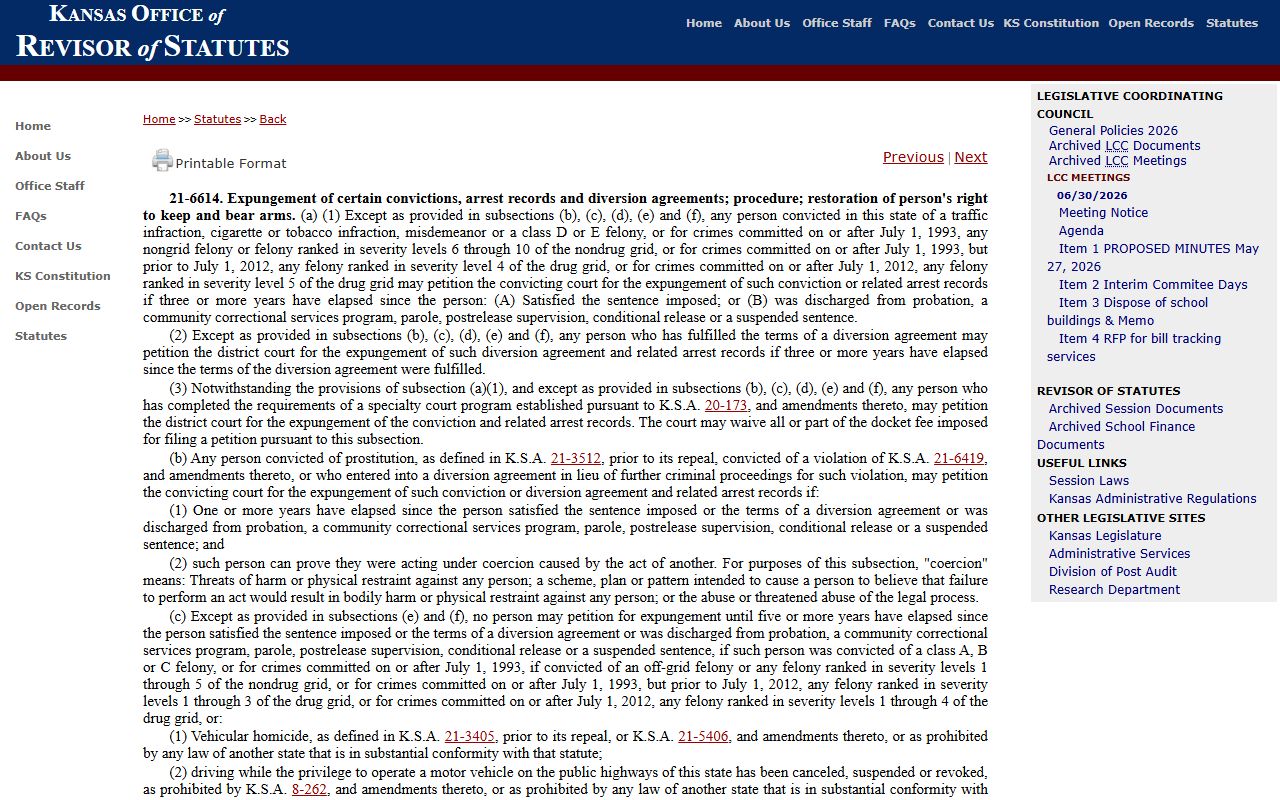
For charge records, the statute matters most when an arrest, diversion, or conviction has moved from public access into an expungement request.
Restricted Miami County Charge Records
Some charge-related records are not open even when a case number or calendar entry exists. Juvenile and child-in-need-of-care material can be confidential or partly restricted. Sealed cases and sealed records are not available through public portals or courthouse terminals. Personal identifiers, minor names, financial account numbers, and sensitive victim details may be redacted. Search warrants can also remain sealed or unavailable until execution, return, or court order.
| Category | Public Access Effect | Research Source |
|---|---|---|
| Sealed record | Hidden from public access by law or court order. | Rule 22 and court order limits. |
| Expunged record | Public access is limited after court approval, with exceptions. | K.S.A. 21-6614. |
| Juvenile or CINC matter | Public calendars may show limited data, but records can be confidential. | K.S.A. 38-2209 and Rule 22. |
The Kansas child-in-need-of-care confidentiality statute is included because juvenile-related records can intersect with arrest or charge questions.
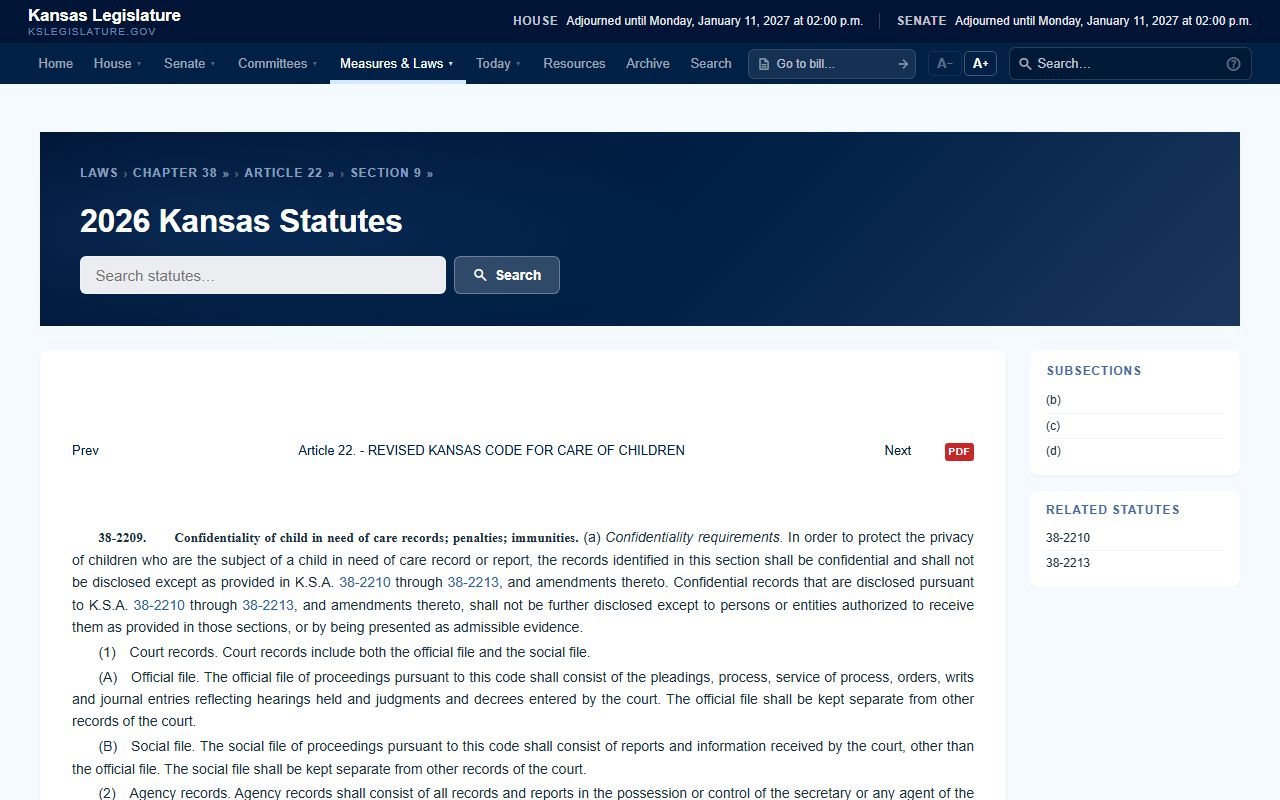
That confidentiality rule is one reason a Miami County search may show less for a juvenile-linked matter than for an adult criminal case.
Miami County Prosecutor Role
The County Attorney decides and prosecutes state criminal charges in District Court. The official county page names the Miami County Attorney's Office at the courthouse and states that all cases handled by that office are through the District Court of Miami County, Kansas. This matters because an arrest by law enforcement is not the same as a prosecutor's filed charge. The filing decision can change the case level, charge severity, count wording, bond request, and future court events.
City prosecutors handle municipal ordinance cases. Louisburg's directory, for example, lists its municipal prosecutor, judge, and clerk. Paola, Osawatomie, and Spring Hill municipal matters should be checked through their own court clerks or city court pages. A city traffic warrant or ordinance charge may have a different access path from a District Court charge.
The prosecuting attorneys' training fund statute appears in the research because District Court fee mechanisms can tie criminal filings to prosecutor-related costs.
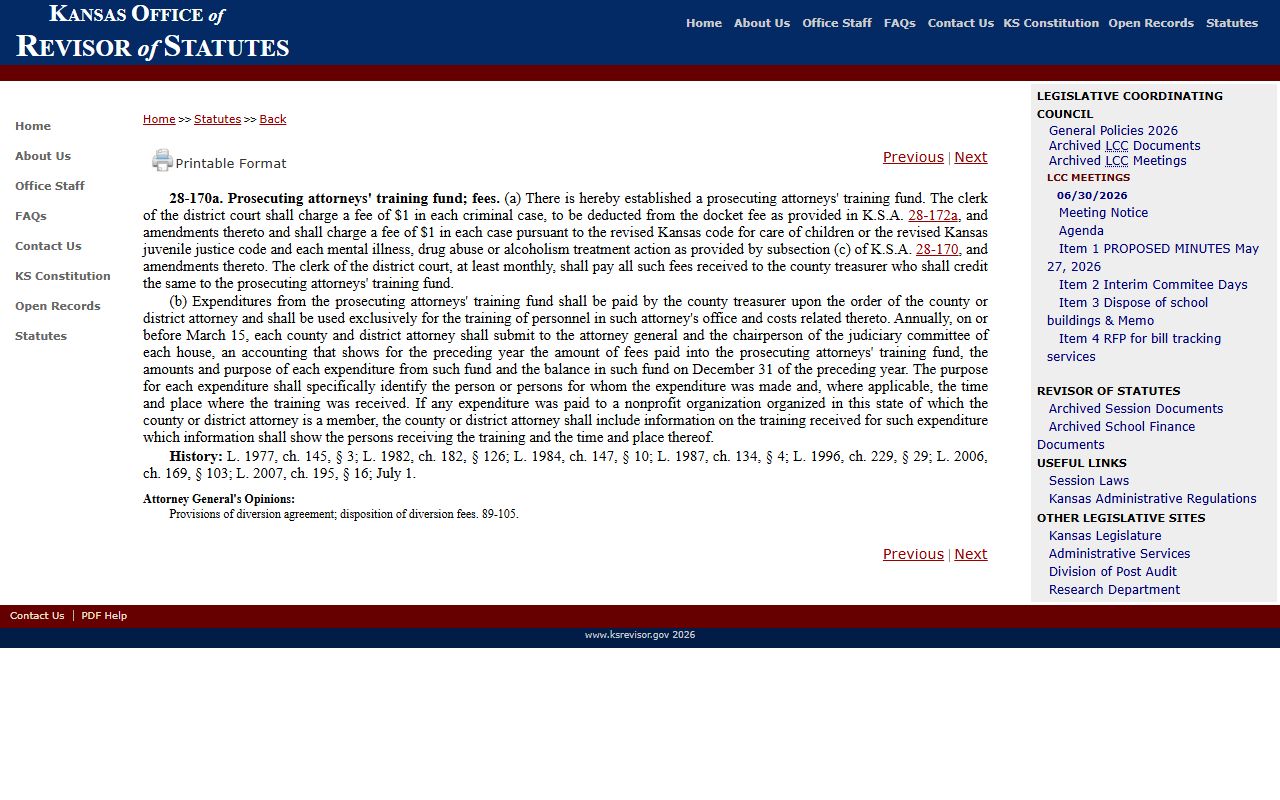
Fee and fund statutes do not prove a charge, but they help place Miami County charge records inside the state court filing system.
Note: For legal use, verify the current charge, disposition, and sealing status with the court or records custodian.