
Miami County Marriage License Records
Marriage licenses for Miami County are processed through the Kansas Judicial Branch electronic license system, with district courts involved in processing the license after the online application is submitted. Kansas court resources state that applicants no longer start by going to a district court clerk counter. The application is completed online through the Kansas Judicial Branch marriage license application, and an applicant may choose a Kansas county to process the license.
The license is not the same document as a later certified marriage certificate. The license authorizes a marriage ceremony after issuance and is valid for use anywhere in Kansas. After the ceremony, the completed license is returned to the issuing court, and the filed license is later forwarded to the state vital records office. That route is why Miami County marriage records can involve both the Clerk of the District Court and KDHE, depending on the document requested.
The KDHE Office of Vital Statistics page is the state source for certified vital records and access limits.
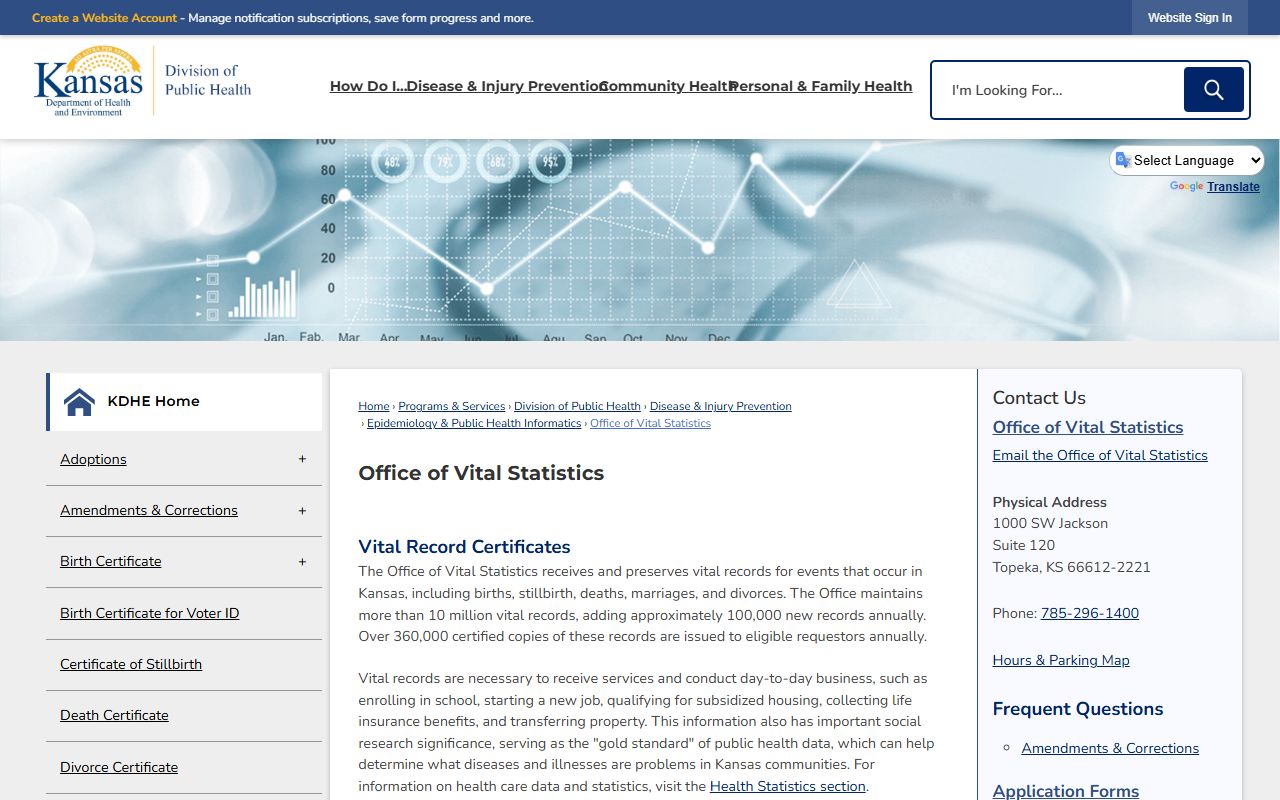
KDHE's vital records page matters because Kansas marriage and divorce certificates are restricted to eligible requesters, not released as general public records.
Apply for a Miami County Marriage License
The Kansas marriage license path is an online process, so applicants should prepare names, dates, contact details, county processing choice, and payment before starting. Kansas Self-Help lists the marriage license fee and state support phone lines. A statewide district court FAQ cited in the research states that the completed license must be returned to the issuing court within the required period after the ceremony.
- Open the Kansas Judicial Branch online marriage license application and choose the county processing option that fits the couple's plan.
- Enter each applicant's full legal name, date of birth or age, and contact information exactly as requested by the online form.
- Pay the license fee through the online process. Card or e-check service fees may apply in addition to the license charge.
- Wait for issuance before the ceremony. Once issued, the Kansas license may be used anywhere in Kansas.
- After the ceremony, make sure the completed license is returned to the issuing court within the required return period.
Note: Miami County marriage records tied to the license process are court records first, while certified certificates are issued by KDHE.
Miami County Marriage Application Fields
The official research captured only a partial field inventory from the state online process and Kansas marriage-license help pages. The live application may ask for more detail, but the fields below are the confirmed items to expect for Miami County marriage license processing. Use exact names and contact details to avoid delay.
| Field | Required | Notes |
|---|---|---|
| Applicant 1 legal name | Yes | Use the full legal name requested by the Kansas online form. |
| Applicant 2 legal name | Yes | Enter the second applicant's full legal name. |
| Date of birth or age | Yes | Used for eligibility review. |
| Contact email or phone | Yes | Needed for online processing and follow-up. |
| County processing choice | Yes | The applicant may choose any Kansas county to process the electronic license. |
| Payment | Yes | The license fee is paid online, with possible card or e-check service fees. |
| Ceremony return | After ceremony | The completed license must be returned to the issuing court. |
Miami County Marriage and Divorce Fees
Fees differ by document type. A marriage license fee is paid through the court licensing process. Certified marriage and divorce certificates come from KDHE. A divorce case file or decree is held by the District Court, and the court clerk should confirm current copy or certification costs before a requester relies on a figure.
| Item | Amount or Rule |
|---|---|
| Kansas marriage license | $85.50 |
| KDHE certified marriage certificate | $20 per certified copy |
| KDHE certified divorce certificate | $20 per certified copy |
| KDHE divorce certificate search span | Fee covers a five-year search |
| District court divorce decree copy | Confirm current copy and certification cost with the Clerk of the District Court |
Find Miami County Divorce Records
Divorce case files are District Court records. For a Miami County divorce records search, start with the district court case path when the goal is the decree, pleadings, parenting-time orders, support orders, motions, or hearing history. Kansas CaseSearch may show public case information unless the record is restricted, but sensitive family details can be redacted or kept from public electronic access under court rules and privacy limits.
KDHE divorce certificates are different. A certificate proves the vital-record event and may satisfy some administrative needs, but it is not the full divorce decree and does not replace the court file. KDHE's divorce certificate application requires spouse names, date and place of divorce, applicant contact information, relationship or direct-interest basis, identification, and payment.
The KDHE marriage certificate ordering page shows the state's certificate-ordering model and fees for certified copies.
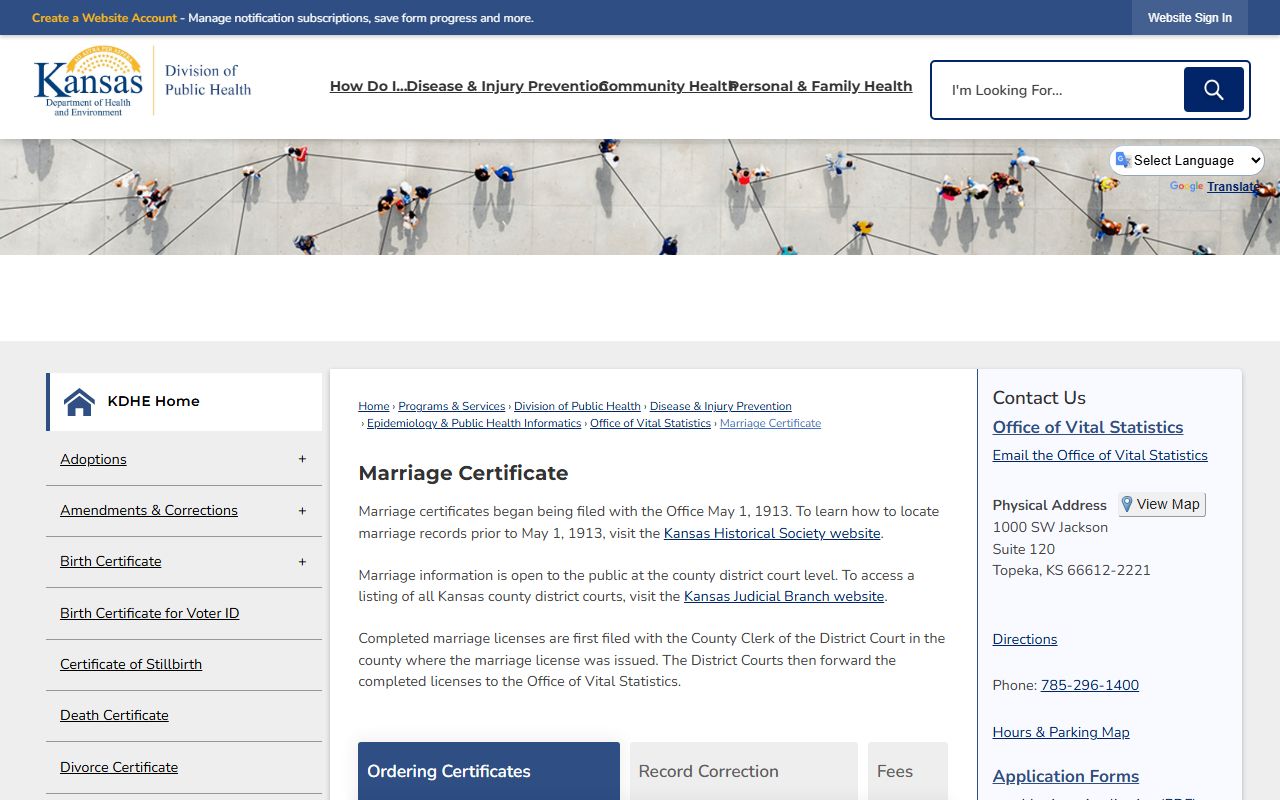
The certificate page is useful for Miami County marriage and divorce records because it shows why KDHE orders are identity-based vital-record requests, not broad public searches.
Certified Miami County Vital Records
Kansas vital records are not public records under KDHE's rules. Certified marriage certificates and certified divorce certificates are issued to the person named, immediate family, legal representatives, or a requester who can prove a direct interest. That restriction is important when a person is searching for someone else's Miami County marriage records or divorce records for genealogy, litigation, or personal reasons.
KDHE lists several certificate-ordering methods for marriage records. Walk-in service is available during published KDHE hours and may be completed quickly if the record is easy to locate. Internet orders through VitalChek carry an added expedited service fee. Telephone orders use the state-listed 24-hour number. Mail orders use the KDHE application and depend on mailed documents, identification, and processing time.
KDHE Office of Vital Statistics
Kansas Department of Health and Environment
Use KDHE published certificate forms and ordering channels
877-305-8315 for telephone certificate orders
Court Files vs KDHE Certificates
Miami County divorce records often create confusion because two offices can hold useful but different records. The District Court maintains the actual divorce case. KDHE certifies the vital event. For marriage, the court licensing process creates and files the license, while KDHE later issues certified marriage certificates to eligible requesters.
| Record Needed | Best Source | What It Shows |
|---|---|---|
| Marriage license application or issuing-court record | Clerk of the District Court or Kansas Judicial Branch process | License processing record and returned license route. |
| Certified marriage certificate | KDHE Office of Vital Statistics | Certified proof of the Kansas marriage event. |
| Divorce decree or case file | Miami County District Court | Court orders, decree terms, filings, docket entries, and public case history. |
| Certified divorce certificate | KDHE Office of Vital Statistics | Certified proof that a divorce was recorded in Kansas. |
Access rules also differ. A public district court search may show basic divorce case information if the file is not sealed or restricted, but the certificate request at KDHE is eligibility-based. A requester who needs proof for a name change, benefits, remarriage, school, military, immigration, or agency filing should identify whether that agency wants the court decree, the certified divorce certificate, or the certified marriage certificate. Asking for the wrong document can delay the request even when the event happened in Miami County.
Family case records may contain parenting-time disputes, child support information, financial identifiers, protection orders, or other private details. Kansas court access rules and redaction practices may limit what appears online. If CaseSearch confirms a Miami County divorce case but not the document needed, the next step is a Clerk of the District Court copy request. If KDHE cannot locate a certificate in the requested span, the requester may need to verify the county, year, and party names from the court file before ordering again.
Marriage records have a similar route problem. The online license process begins with Kansas courts, but the post-ceremony certified certificate comes from KDHE after the completed license is returned and processed. A newly married couple should keep a personal copy or note of issuing-court details, officiant return status, and ceremony date so a later certificate request can be matched to the correct state vital record.
For Miami County users, the best request wording is precise. Ask the court for a divorce decree, docket entry, marriage-license filing, or certified court copy when the document came from a court case or court license file. Ask KDHE for a certified marriage certificate or certified divorce certificate when the need is vital-record proof. If the requester is not one of the named parties, the relationship or direct-interest basis should be ready before submitting the KDHE order.