
Miami County Clerk Records Office
The State Court Structure Map identifies the primary court clerk as the Clerk of the District Court. Miami County's research also identifies a separate elected Miami County Clerk / Elections office led by Laura Epp. Those offices should not be merged. The Clerk of the District Court keeps court records, supports marriage license processing, collects fines, and provides administrative services for the court and litigants. The elected County Clerk is the county office of record and the county freedom of information officer for county-government records.
Court users should start with the District Court for civil, criminal, domestic, probate, juvenile, state traffic, and fish and game case records. County-government users should contact County Clerk / Elections for board records, election questions, tax-roll duties, and KORA assistance for county administrative records. Sheriff's reports and jail records are a third route through the Sheriff's Central Records Division.
Clerk of the District Court
Miami County District Court
120 S. Pearl Street
Paola, KS 66071
913-294-3326
Public hours: 8 a.m. to 4 p.m.
Miami County Clerk / Elections
County Clerk Laura Epp
201 S. Pearl, Suite 102
Paola, KS 66071
913-294-3976
Monday-Friday 8 a.m.-4:30 p.m.
The County Clerk / Elections page documents the elected clerk's non-court duties and contact details.
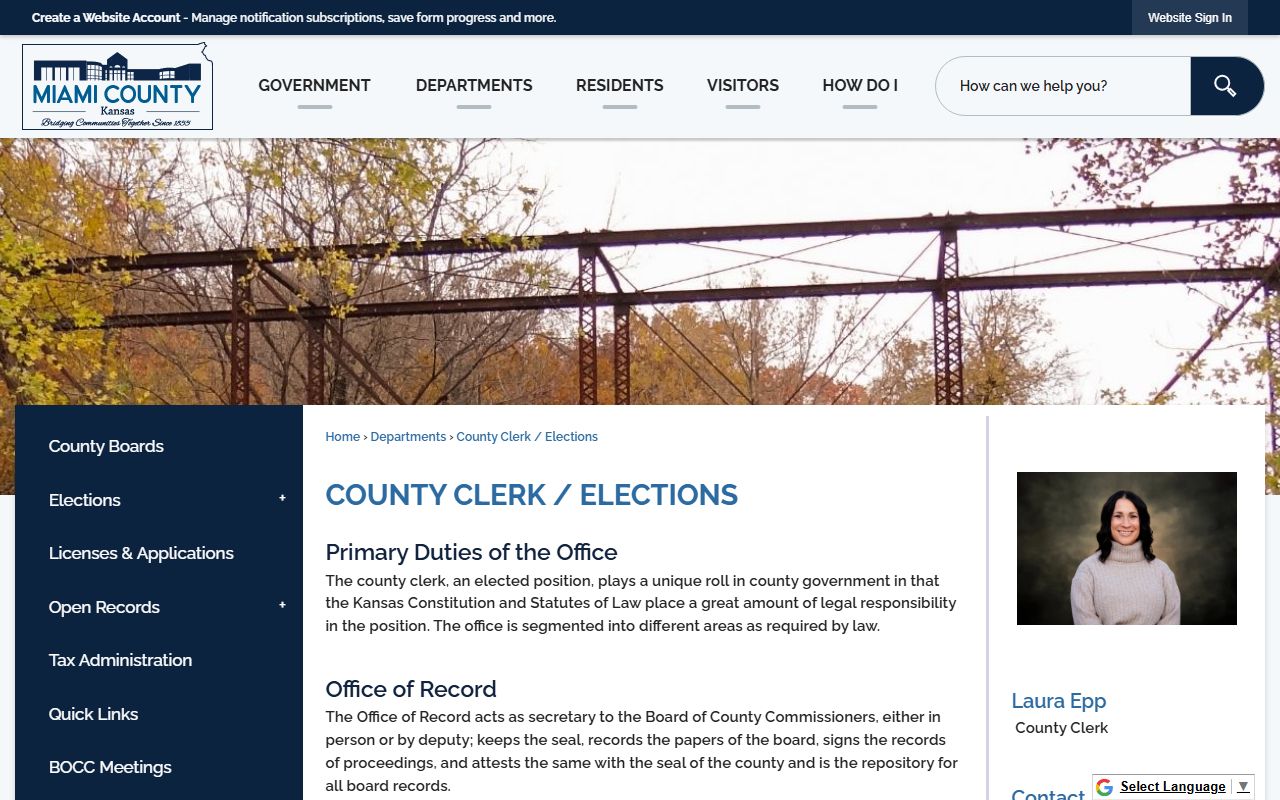
The county clerk image is included because it helps show the office distinction that affects Miami County court-record requests.
Miami County Clerk Court Duties
The district court clerk function serves the court and the public by keeping case files and docket records. Miami County budget material states that the clerk's office maintains court records, provides marriage licenses, collects fines, and provides administrative services for the court and litigants. Those duties connect directly to Kansas CaseSearch and courthouse terminal access.
- Maintain civil, criminal, domestic, probate, juvenile, traffic, and fish and game district court case records.
- Support court users who need public terminal access or copies of case documents.
- Process court payments, fines, and costs when the matter belongs to the District Court.
- Support marriage license processing through the Kansas Judicial Branch electronic license process.
- Apply court access limits for sealed, expunged, juvenile, confidential, or redacted records.
The Miami County licenses and applications page is tied to local license and certified-copy routes.
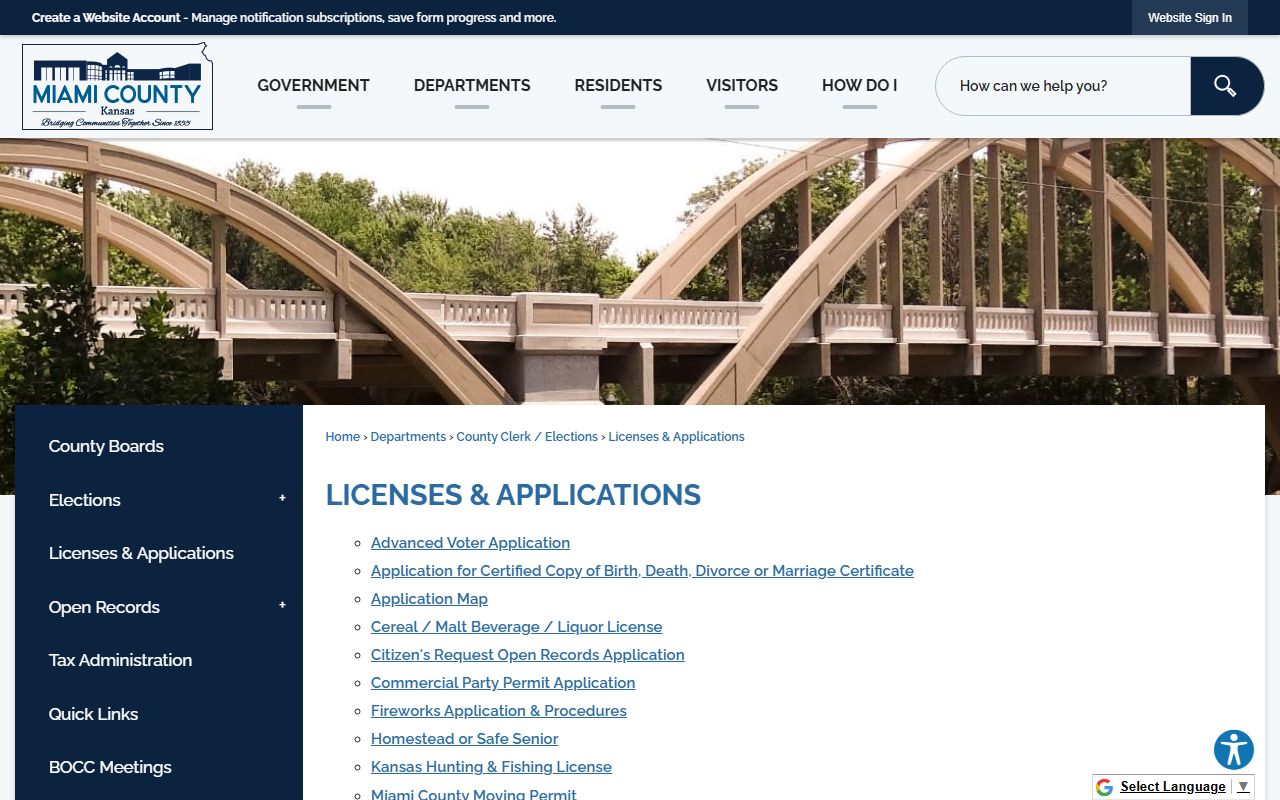
This local license page supports the clerk page because marriage-license and certified-copy questions often overlap with court and vital-record requests.
Request Miami County Certified Copies
A certified copy is a court copy bearing certification that it is a true copy from the official record. Certified copies may be needed for appeals, name changes, estate work, title issues, agency filings, divorce proof, or other formal uses. A printout from a public search screen is not the same as a certified court copy.
- Identify the case number, party names, case type, and document needed. Miami case numbers may include formats such as MI-2025-CR-000214 or MI-2026-TR-000033.
- Check Kansas CaseSearch or the courthouse terminal first if the goal is to confirm the case exists and locate the right document name.
- Contact the Clerk of the District Court and ask for the current copy, certification, payment, and delivery rules for that document.
- Provide any required fee or advance payment. If access is restricted, ask whether party status, a court order, or other authority is required.
- Keep the certified copy sealed or intact if a court, agency, bank, or title company requires official certification.
Miami County Records Request Fields
The research did not find a county-specific online form field list for court copies. It did capture the Miami County open-records request concepts used for county-government records, and those same practical details help a requester describe the record well enough for the correct custodian. Court records should still be requested from the court custodian, not assumed to be County Clerk files.
| Field | Required | Notes |
|---|---|---|
| Requester identity | Implied | Needed for response, fee estimate, and any access review. |
| Description of records | Implied | Be specific enough for the custodian to identify the court file or county record. |
| Case number or parties | Recommended | For court records, include case number and names whenever possible. |
| Delivery or inspection preference | Unspecified | State whether inspection, paper copies, electronic copies, or certified copies are needed. |
| Fee acknowledgement | Unspecified | Miami County may charge fees and may require advance payment for county records. |
| Contact information | Implied | Needed for response, clarification, and payment instructions. |
Note: A court record request and a county KORA request may use similar facts, but they go to different custodians.
Miami County Clerk Fees
Miami County's Open Records page says public agencies may charge fees under the Kansas Open Records Act and that a county fee schedule has been established by resolution. The research also found statewide district court filing fees and other record-related costs that users may encounter. Confirm current court copy and certification fees with the Clerk of the District Court before mailing payment.
| Item | Amount or Rule |
|---|---|
| County open-records fees | Fee schedule by Resolution R22-01-001; request estimate in advance |
| Chapter 60 district court filing example | $195 in statewide district court schedules |
| Domestic filing example | $195 in statewide district court schedules |
| Small claims filing example | $47.50 or $67.50 depending on claim amount in statewide schedules |
| KDHE marriage or divorce certificate | $20 per certified copy |
| Court document copy or certification | Confirm current amount with the Clerk of the District Court |
The Miami County Sheriff's fee schedule is a separate custodian fee source for sheriff records and civil process.
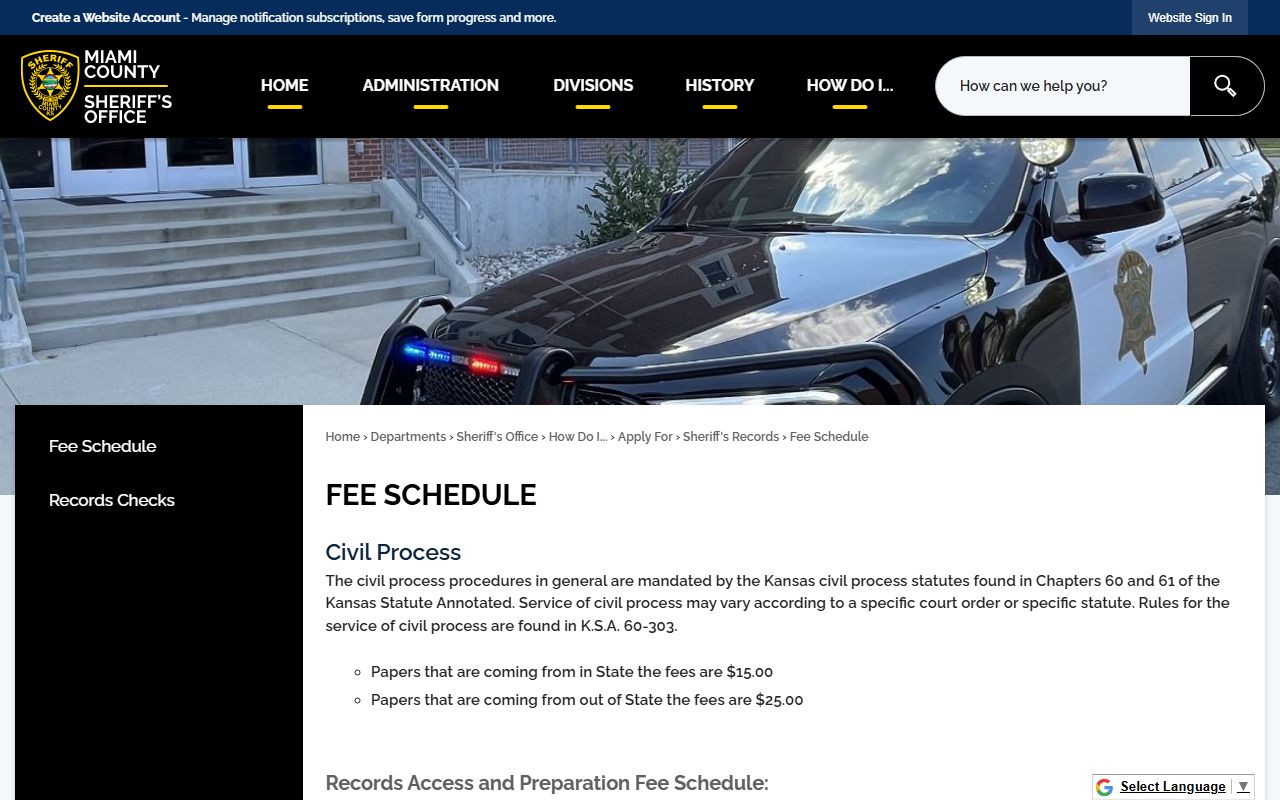
The sheriff fee schedule is included because Miami County record requests often split among court, county clerk, and sheriff custodians.
Miami County Open Records Officer
The elected Miami County Clerk / Elections office is the county freedom of information officer. The county page says the officer prepares educational materials about the Kansas Open Records Act, helps public agencies and the public resolve KORA questions, and responds to inquiries about the act. The Miami County Open Records page points to K.S.A. 45-215 and notes that fees may be charged for access or copies.
That role is important, but it does not make the County Clerk the custodian for every court file. District court case records follow the Kansas Judicial Branch access process and Rule 22. Sheriff's reports, accident reports, and booking-related records go through the Sheriff's Central Records Division. KDHE handles certified vital records.
The practical Miami County routing rule is to identify the record creator before asking for a copy. A board resolution, election record, tax-roll document, or county administrative paper belongs with county government. A filed pleading, court order, docket entry, judgment, probate document, or divorce decree belongs with the Clerk of the District Court. An incident report, accident report, or sheriff record check belongs with the Sheriff's Records Division. Using the correct custodian helps avoid fee delays and prevents a county office from having to redirect the request.
The Miami County Sheriff's resources page provides separate law-enforcement resource links that do not replace court record access.
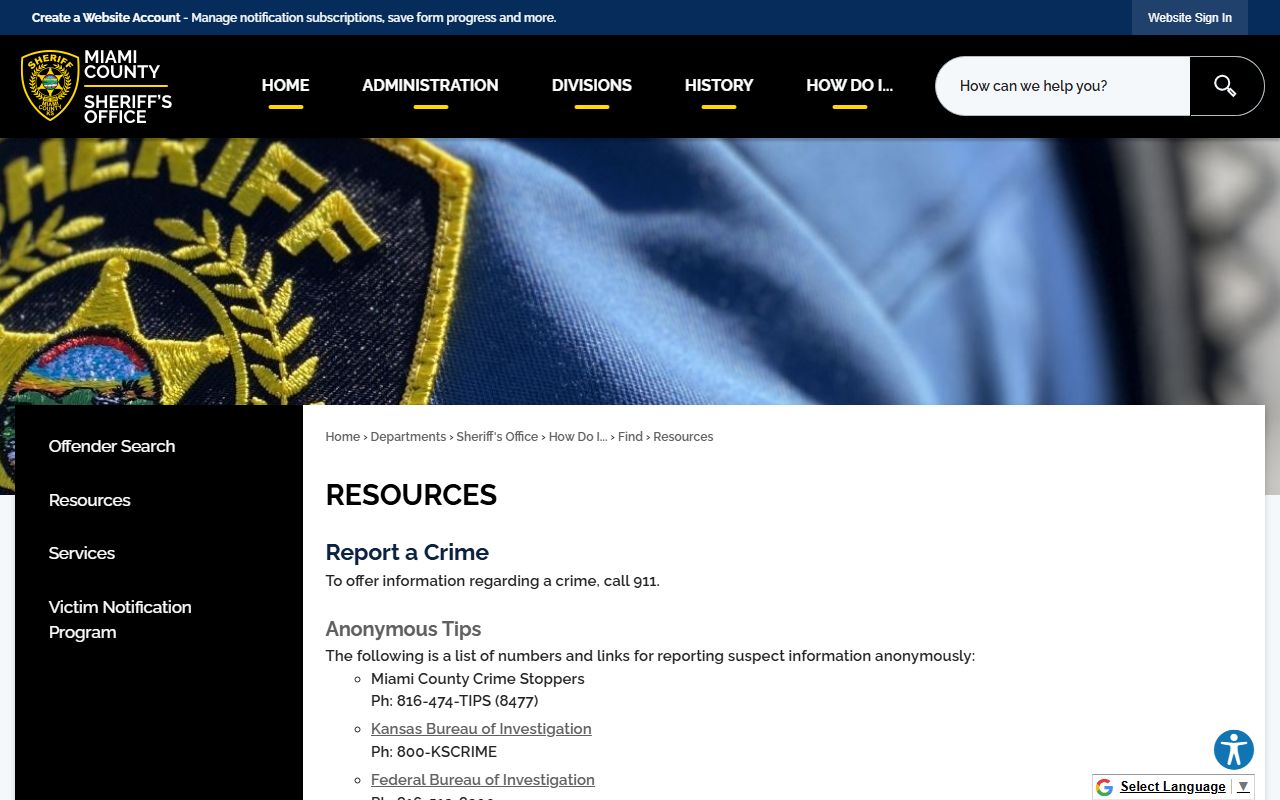
The sheriff resources image reinforces that Miami County has multiple record custodians, each with a different legal role.
Miami County State Record Channels
Some records that appear near court work are not Clerk of the District Court records. KDOR driver records, KDHE certificates, KBI criminal history records, and sheriff incident records all have separate request channels. For example, a traffic ticket may create a district or municipal court case, while the driver-history record is maintained through KDOR.
Certified-copy requests should be framed around the document's legal use. A court-certified decree, judgment, or probate order comes from the court file. A state-certified marriage or divorce certificate comes from KDHE. A statewide criminal-history result comes from KBI. The Miami County Clerk of the District Court can help with the court file, but it cannot certify a state agency's separate record.
The Kansas motor vehicle records portal is one state channel for driver-license record searches.
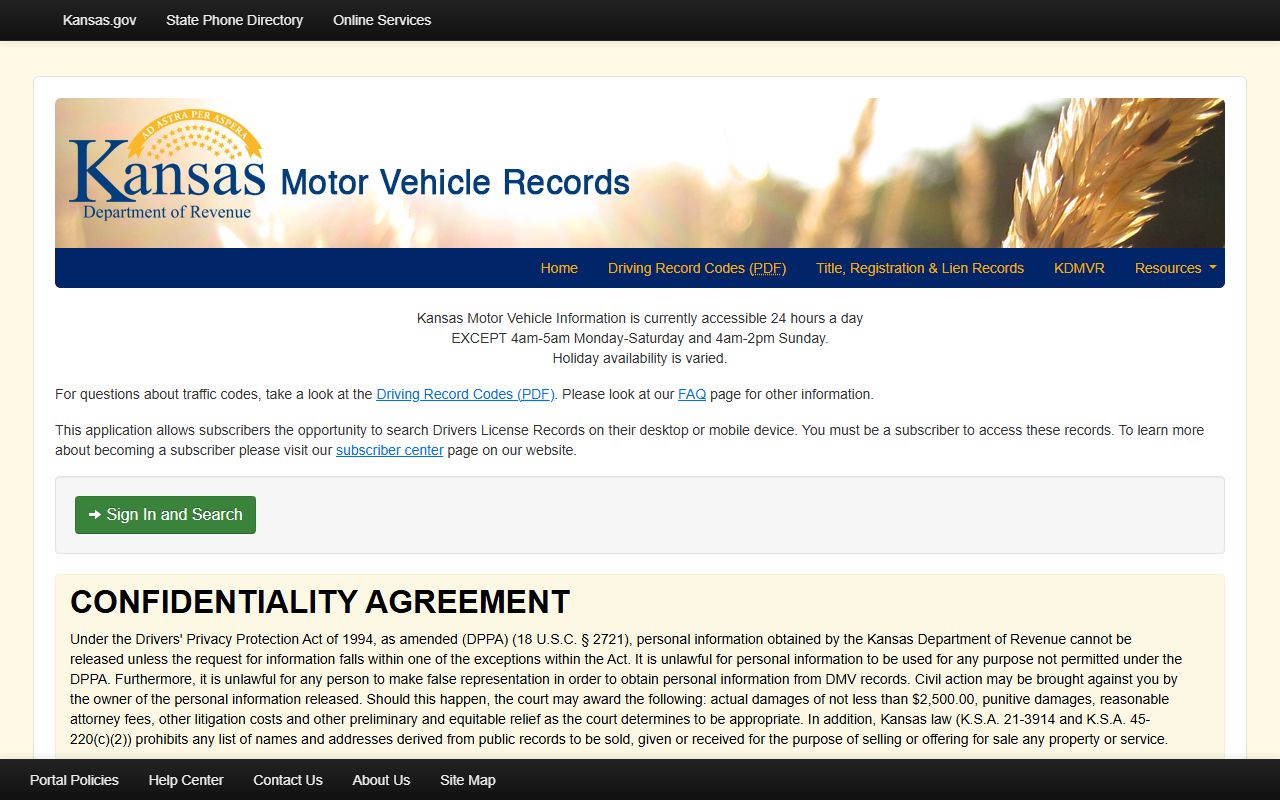
The motor vehicle records portal is relevant because it shows why a court traffic record and a state driver record must be requested from different custodians.
| Need | Custodian | Typical Channel |
|---|---|---|
| District court case file | Clerk of the District Court | CaseSearch, courthouse terminal, or court request |
| County board or county administrative record | Miami County Clerk / Elections | KORA request to county office |
| Sheriff report or record check | Sheriff's Central Records Division | In person, writing, or mail as allowed |
| Certified vital certificate | KDHE Office of Vital Statistics | KDHE order process for eligible requesters |
| Driver record | Kansas Department of Revenue | KDOR or Kansas MVR channel |